
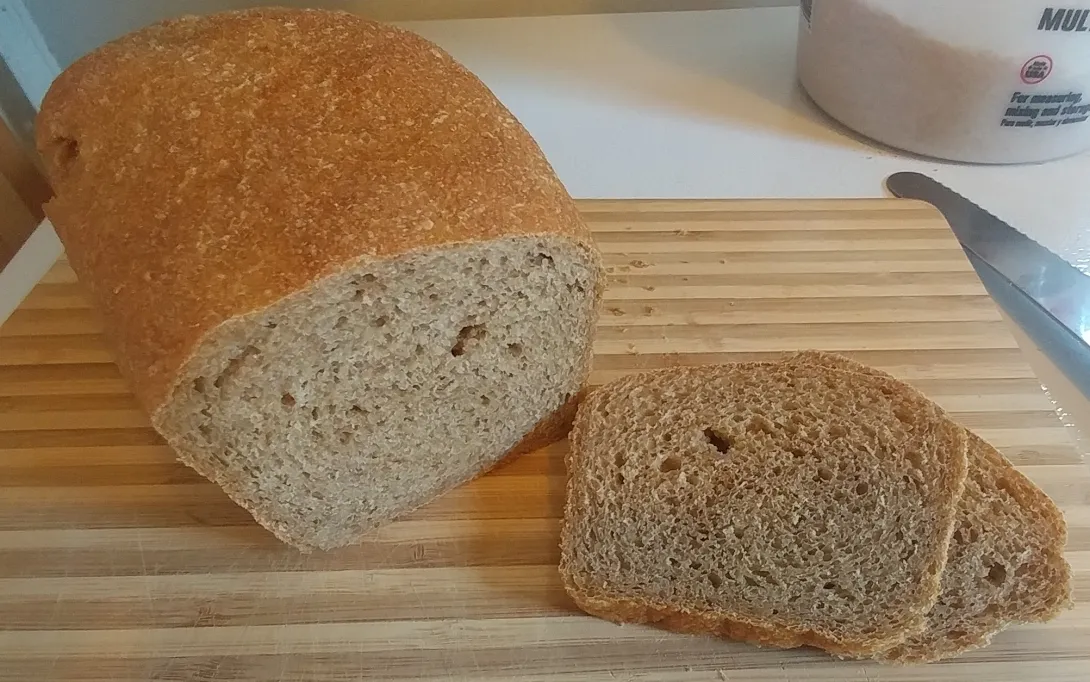
This is a post intended to document multiple bakes of the same loaf. I want to try to learn how to make 100% whole wheat bread using home-milled flour.
The bread I am using is a variation of the Laurel's Kitchen Loaf for Learning. Instead of regular hard wheat, I'm using freshly-milled spelt and kamut flour. I'm using the hydration (68%) recommended in the Breadtopia post on sourdough spelt. I also added two tablespoons of Rus Brot's CLAS, for a little acidification of the dough, since I'm not using the optional yogurt. Here is the full bread recipe:
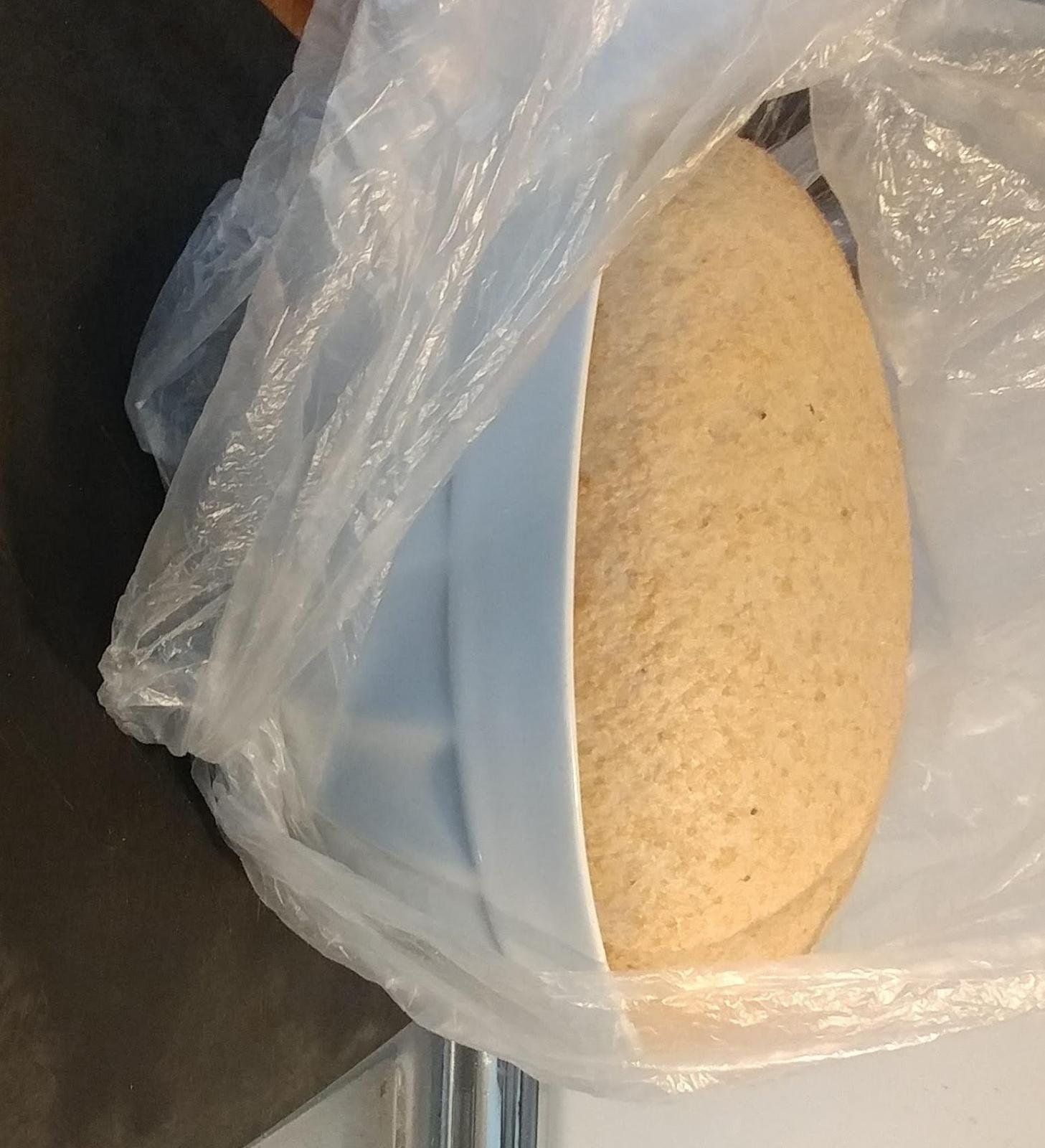
(Sorry, I've no idea how to straighten the picture out.)
I preshaped into logs, covered lightly with plastic, and left to bench rest for 10 minutes.
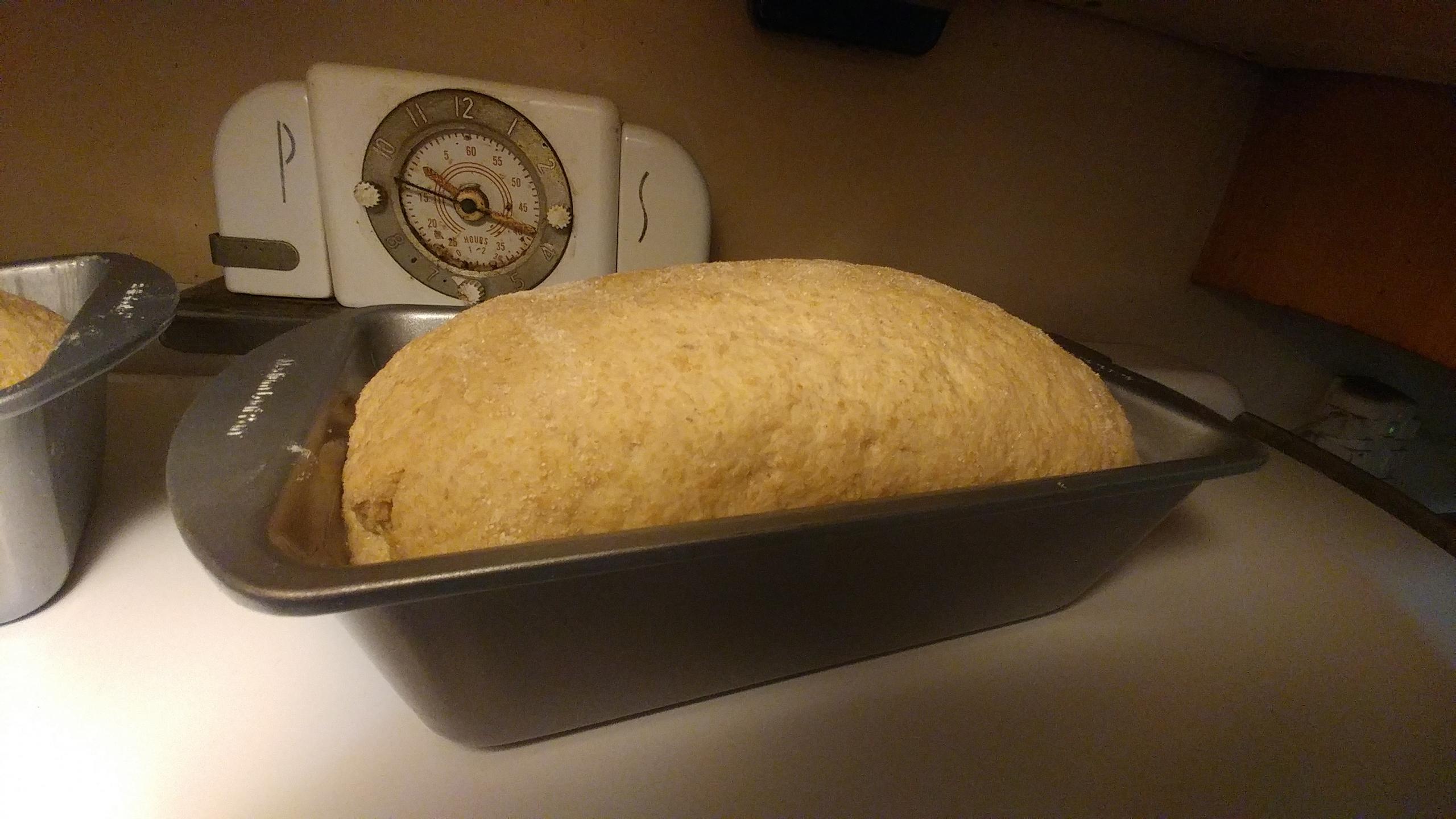
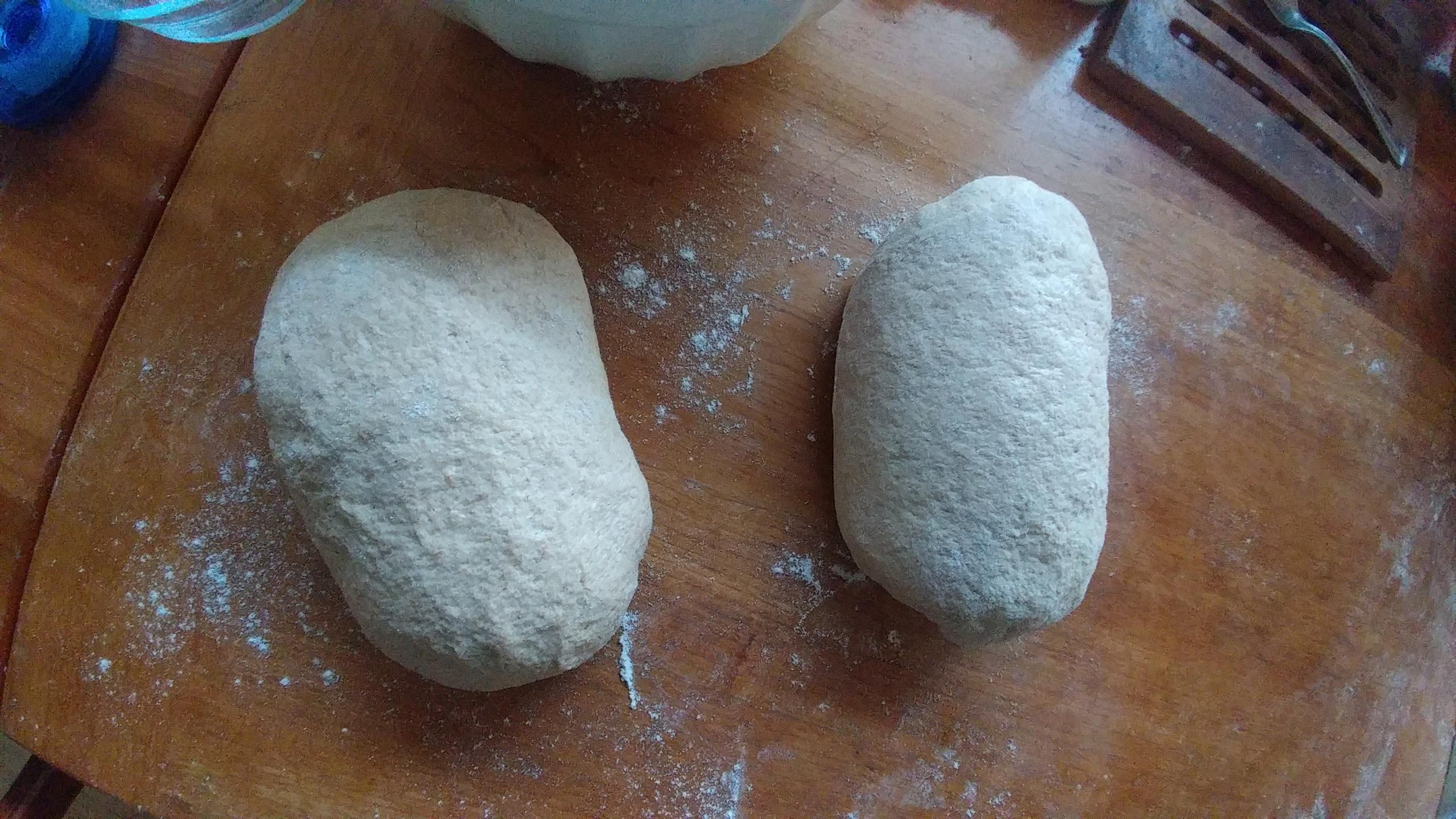 After 10 minutes the dough was noticeably expanded. I then shaped, giving one loaf a tighter and the other a looser shaping, and placed them in buttered loaf tins for the final rise.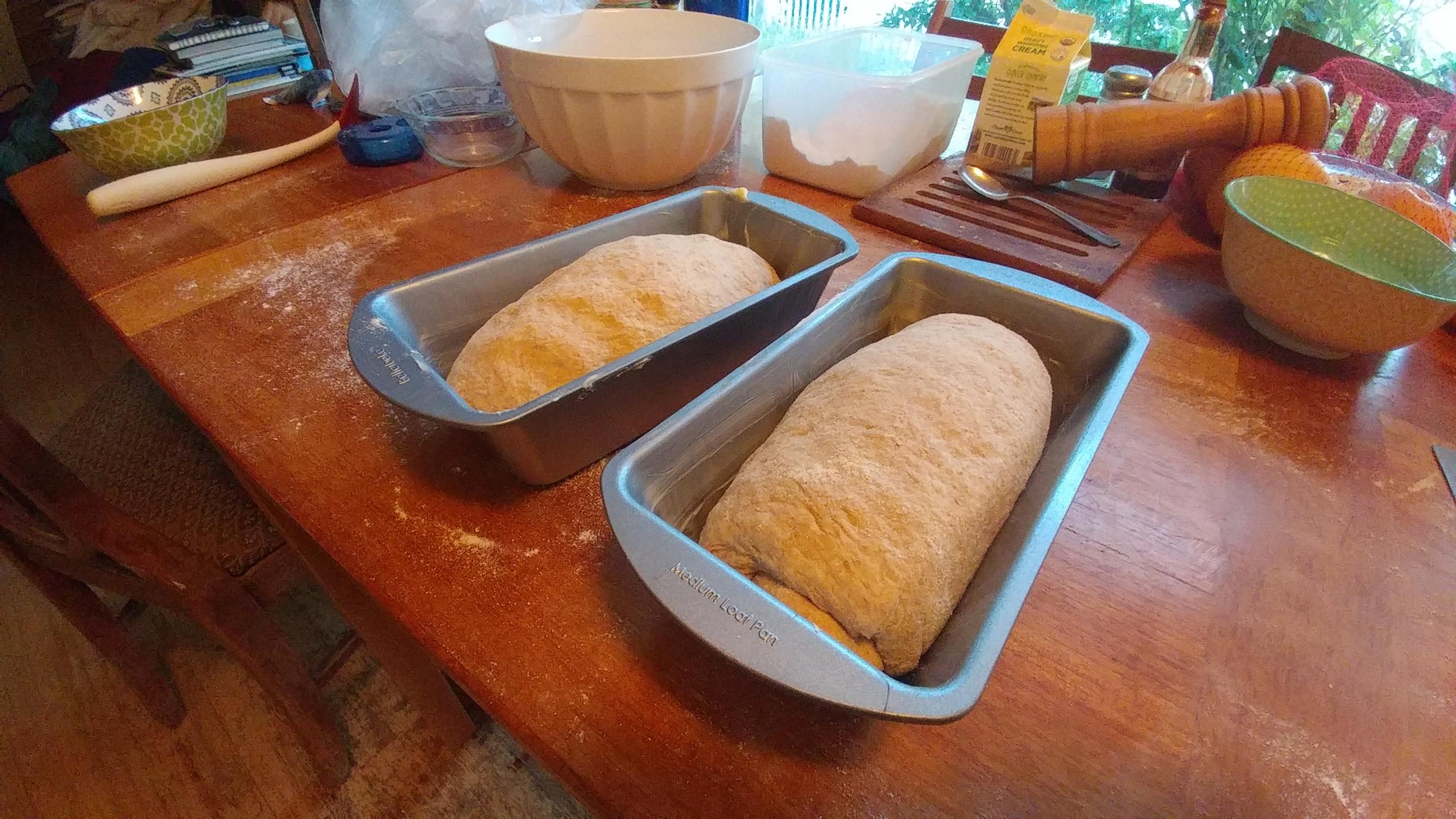
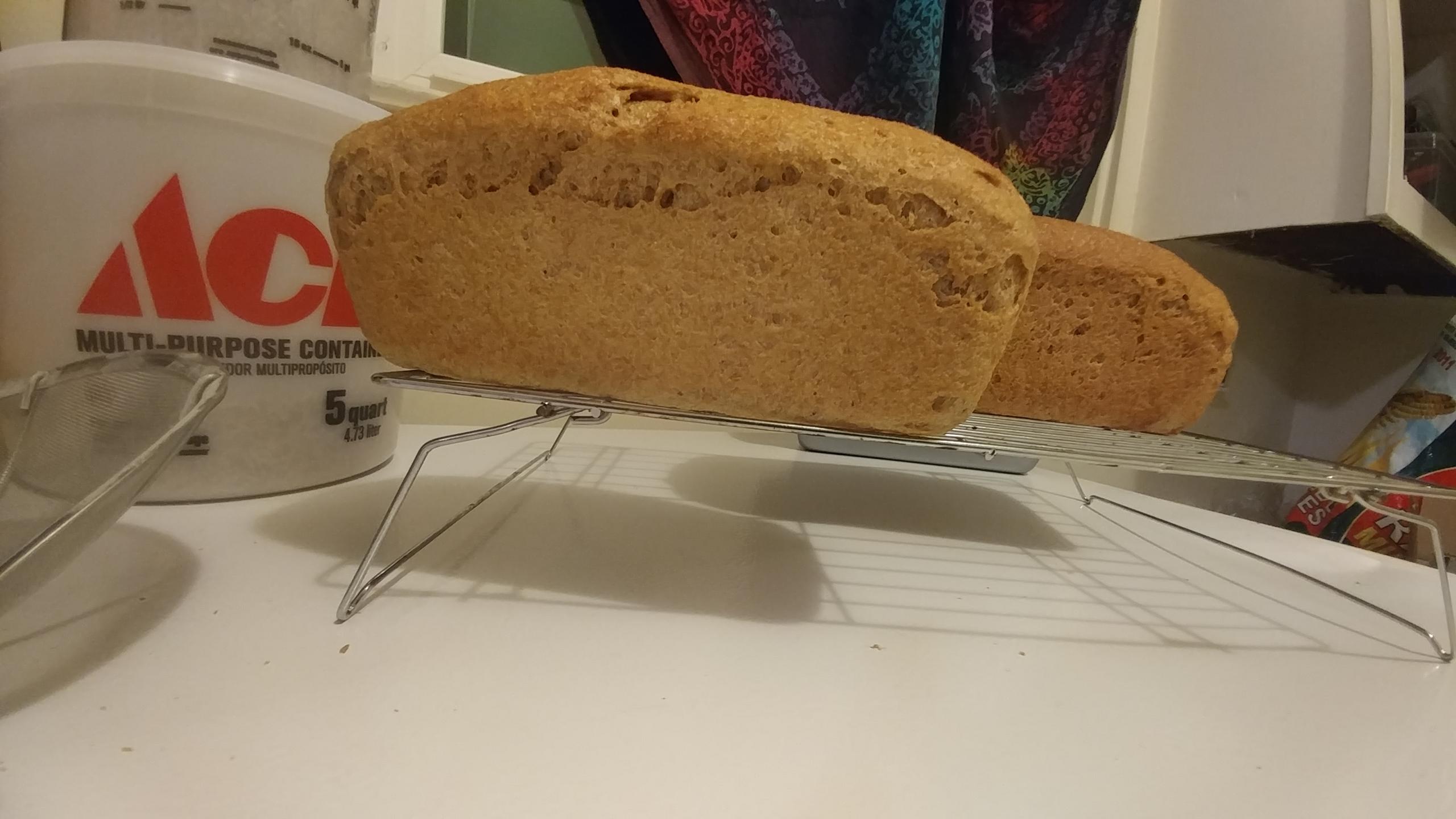
I'm very happy with this bake. The crumb is soft, moist, even, flexible, and flavorful. It is not shreddable: there is a bit of chew to it. The scent of the CLAS is noticeable, as is a slight honey scent, but the flavor is very much plain while wheat with only trace of sweetness and tanginess. Next time I might add a little more CLAS.
Jess, these loaves look great! I will be very interested to see how your progress goes as you try to bake this one a few more times. I'll sort of be doing that with my sandwich loaf that I made, as I tweak that one to my liking.
Nice work!
Rich
Thanks Rich!
Do you have an idea about the compression of the crumb along the very bottom of the loaf?Is that a shaping issue, or something else? (It is most visible if you open the image in a new tab, so it is full-size.)
I hope you document your sandwich loaf bakes too, so I can follow along with you.
-Jess
I'm no crumb expert, but perhaps just slightly underproofed? I posted my recent loaf in my blog, and, if you take a look, my crumb is similar. I expected more crumb "issues" since I literally did as little as possible with my loaf, but it turned out pretty good! :)
Hopefully, one of our resident experts will check in with more thoughts on your first go.
Rich
Spelt can be a very stretchy dough and can easily overproof, not in the breaking down sense but in its ability to trap and hold gas. When it expands too much, the sides where the pan restricts expansion will be pressed dense against the metal and the middle will have more open cells to the point of weakness. Better to err on the side of underproofing. The real test comes when slicing. Although the crumb has a lovely swirl pattern, If the loaf cuts tough at the crust and tears instead when cutting in the crumb section, it's overproofed, as in, it expanded too much before baking.
I would degas thoroughly before shaping for a more even crumb and not let the final proof rise so high.
Hi Minioven, I just saw your comment! The bread cut cleanly and the center was resilient, so I'm guessing it wasn't overproofed, at least not if relying on those signs. After eating both loaves, the only real flaw I perceived was overall slightly boring flavor, and the crumb drying out a bit.
The goal today is to replicate the last bake except for increasing (doubling) the amount of CLAS to 80 grams. This will have the effect of increasing the percentage of fermented rye, and also of increasing hydration, since CLAS is 195% hydration. I would prefer a moister and also more open crumb, so I'm going to try stretch and folds rather than doing an intensive mixing before bulk fermentation begins. Wish me luck.
I really need to remember which website I'm reading. A couple of references to Edgar Degas in this discussion threw me off, just for a second.
I guess it's better to Degas your dough than to Braque it into little cubes. ?
Remember to use your Bosch if you want to thoroughly develop the dough. And once you get really good at baking you can sell your bread and make some Monet!