
I'm working my way through several focaccia recipes, and was struck by the amount of olive oil in some of them. For a loaf with 3-1/2 cups of flour, many recipes call for 2-3 tablespoons of oil in the dough, plus another tablespoon or more on top of the bread before and/or after baking.
I do like to add a tablespoon of olive oil to my breads, which I think helps to reduce staling, but it seems to me that these larger amounts are excessive. So I'm wondering what the purpose of that much olive oil is. Is it added for taste? Texture? Tenderness? Hydration? (which could be accomplished with water instead) A more open crumb? A softer crust?
I'm asking because I do try to limit my consumption of fats, and even though olive oil is healthier than Crisco or lard, it's still 15 grams of fat per tablespoon. Thanks in advance for any thoughts on this! Seth
All the focaccia recipes I've seen call for an extreme amount of olive oil, usually also butter too. Taste has to be a big part of the reason. I suspect the oil added on top is also possibly meant to give a certain texture to the crust, or for helping protect any toppings from burning.
From my (limited) experience trying to find how little oil I can get away with and still have a reasonably soft sandwich bread, it does take quite a bit more than I'd like to get the tenderness I want. So I suspect that's a large part of it. This year I'm looking forward to finding less calorically dense means to accomplish that. Scald/yudane or tangzhong seems to be a common recommendation for softness, but I'm not sure how effective those techniques are as a substitute for oil.
If what you think about oil reducing staling is true, in that regard it would make a good bit of sense when baking a very large flatbread like focaccia, to put a lot of oil in the dough, since flatbreads tend to stale faster.
There is a thread with a long discussion of fats in bread at
https://weightloss-slim.fit/node/24906/30-rye-sourdough-sandwich-loaf-yes-even-rye-breads-can-be-fluffy-and-soft%3C/a%3E%3Cbr%3E%3Cbr%3EOne point is that you want to avoid low amounts of oil or fat, below 2%. Above 2%, the results depends on the kind of lipid. This is possibly the most informative bit:
Also this:
TomP
I'm not sure I would characterize olive oil as more significantly more polar than other vegetable oils. It's too bad it's such an old thread; I would be curious to get some clarification. I looked in Emily Buehler's book and found the graph of the effect of lipid content on loaf volume. But the polar and nonpolar lipids are characterized differently in the original research than what was described in the thread.
Based on the behavior shown by the polar flour lipids, adding egg yolk, milk, or lecithin should increase loaf volume. Increased loaf volume is associated with initial softness of the bread.
According to this link, olive oil is non-polar:
https://www.guidechem.com/guideview/lab/is-olive-oil-polar-or-nonpolar.html
Is Yeast Water. It has the most amazing ability to keep the crumb fresh and soft. I use it in my Challah and that’s the best proof.
Challah is notoriously stale after 24 hrs . That’s why you see so many uses for stale Challah lol. But mine is soft and fresh for several days kept a room temp and also freezes and defrosts back to a soft crumb ,all due to the Yeast Water.
As far as focaccia I’ve never eaten one that didn’t have a stale type crumb from the first serving. Whether this is due to too little oil or overbaking I don’t know.
If you haven’t made/ baked with YW then do give it a try. c
Can you please explain in detail your use of yeast water, well enough that others may learn how to do it?
There are many topics both here and on Google searches🙏
One of the advantages of making your bread is - you can have it any way you like. It is mainly for you. Enjoy!
Thanks to all for the good info, it's appreciated. It might just be psychological, but I think adding a little olive oil (fat) and skim milk seems to tenderize the bread and slow down the staling process. But I also put my breads in large gallon-size plastic bags after the first use. Which this does soften the crust a bit, it also helps retain the moisture in the loaves, so that we can often get three days' use from one loaf.
And if my math is correct, then one tablespoon of olive oil and 3-1/2 cups of flour would give a BP of 2% for the oil, so I would be at the minimum amount suggested in earlier posts. I'm going to try increasing the amount of oil by a teaspoon at a time, see how that works out, and what difference it makes, if any. I'm not necessarily looking for more volume, although that might be an OK side effect. Seth
I add what has become known on TFL as The Trinity to almost all of my bread doughs. Equal parts EVOO, honey and either buttermilk or my homemade yogurt. Typically I add 40g each to 750g flour combination or 60g each to 1000g flour combination. It works beautifully to freshen the crumb and lighten the home milled grains I use.
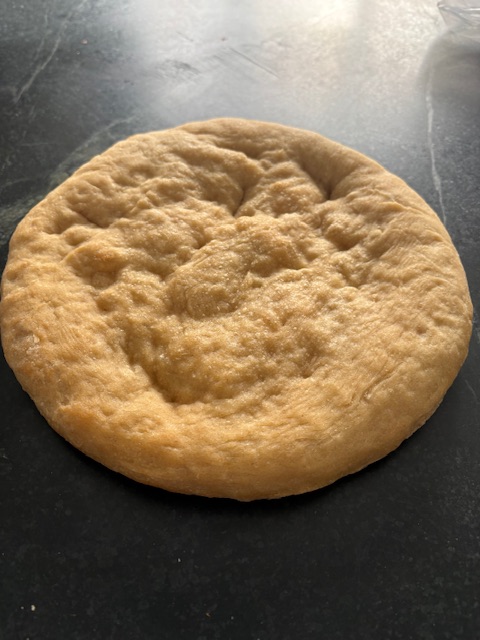
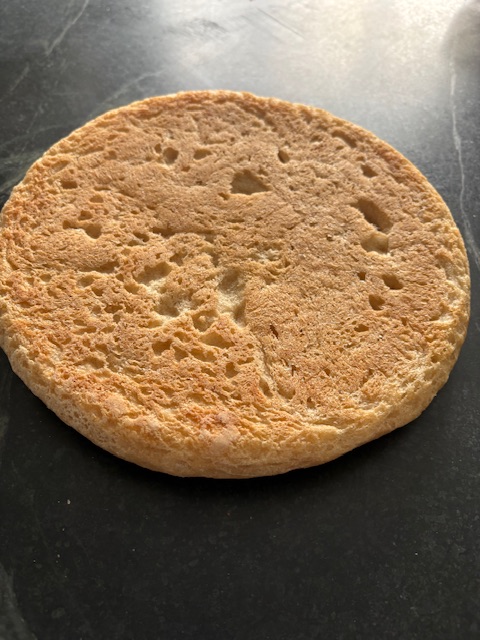
For my pizza dough, which is very focaccia like in thickness and baking technique I use 40 g of EVOO to 850 g flour ( half semolina and 1/2 Bread flour) I also use 20g of NON- diastatic malt as a sweetener/ flavor enhancer. 460g of very bubbly levain as well.
Tonight’s crust. Has been in freezer well wrapped. Very tender. Will be used for pizza. Will take another picture later tonight to show crumb.
Long time no writing from me, but this got my attention :D
Honestly, focaccia is basically an olive oil bread. IMO the whole point of focaccia is to deliver olive oil into our
veinsstomach. It should taste distinctly of olive oil, have a slightly oily feel on the hands when eating, and, depending on the style, be soft and fluffy, from both water and oil. I never measure the oil, especially on the outside - just measure with my heart.On the outside the oil can make the dough fry the dough, for the amazing crispy and oily crust, with a soft custardy interior.
Yes, my own description makes me want to bake a focaccia...
I think it's time to make focaccia. Enjoy!
love your defense of olive oil, Ilya. You got me hankering for a focaccia, too. Good to know you're still around! -- Rob
After baking a few test loaves, I've found that 1-1/2 tablespoons of olive oil to 3-1/2 cups of flour in the dough, and then brushing about 1 tablespoon of oil on the top before baking, provides a good olive oil flavor for me. I do try to reduce my fat intake where I can -- one triple bypass was enough for me! Seth