
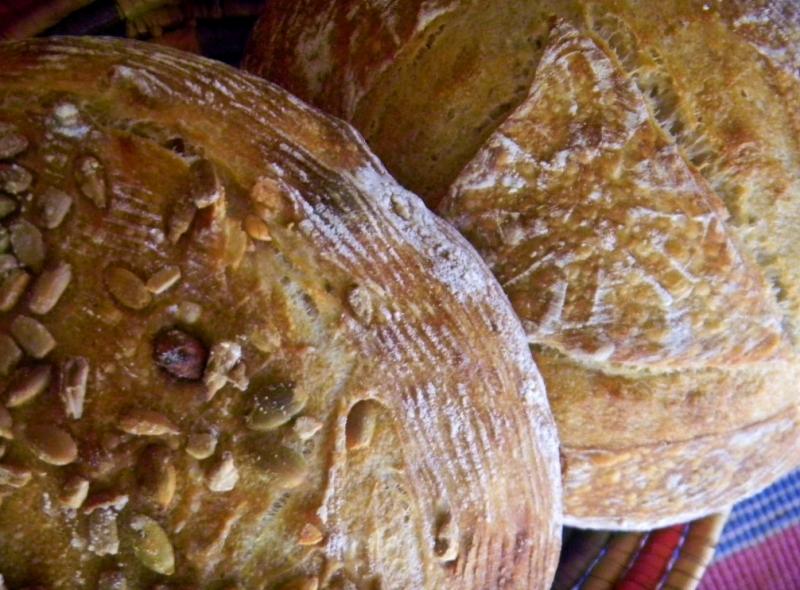
To see the beginning of this bake go to the following link and go down below *********************************
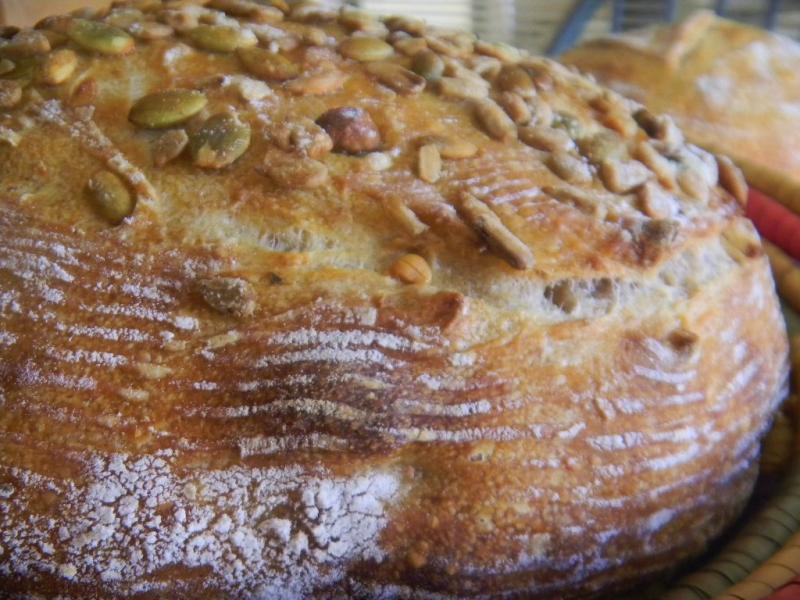
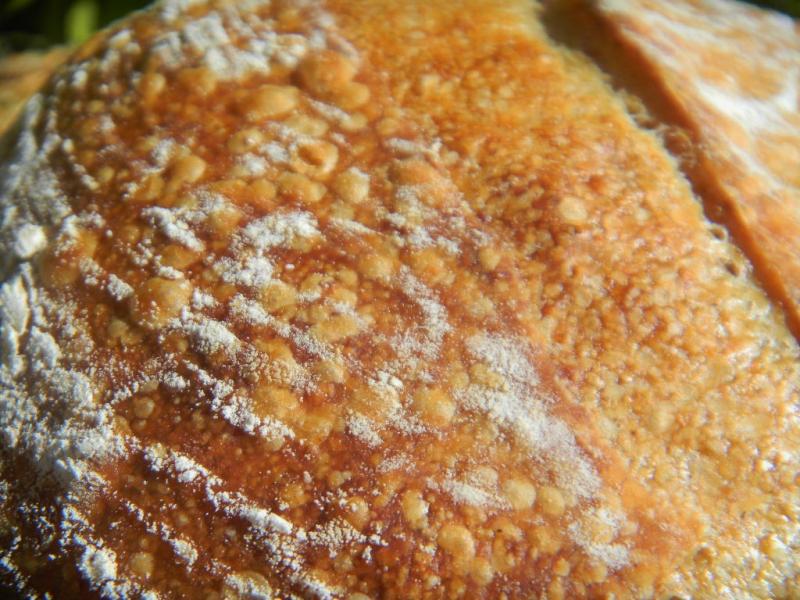
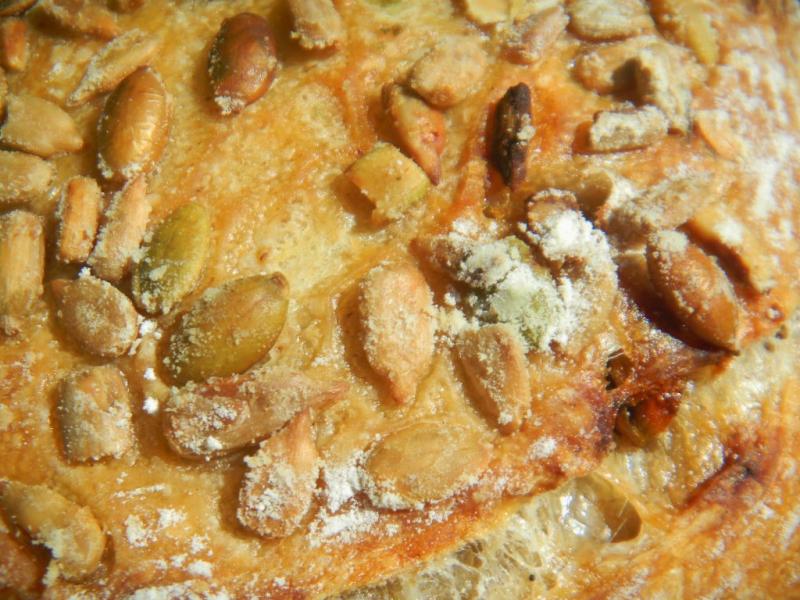
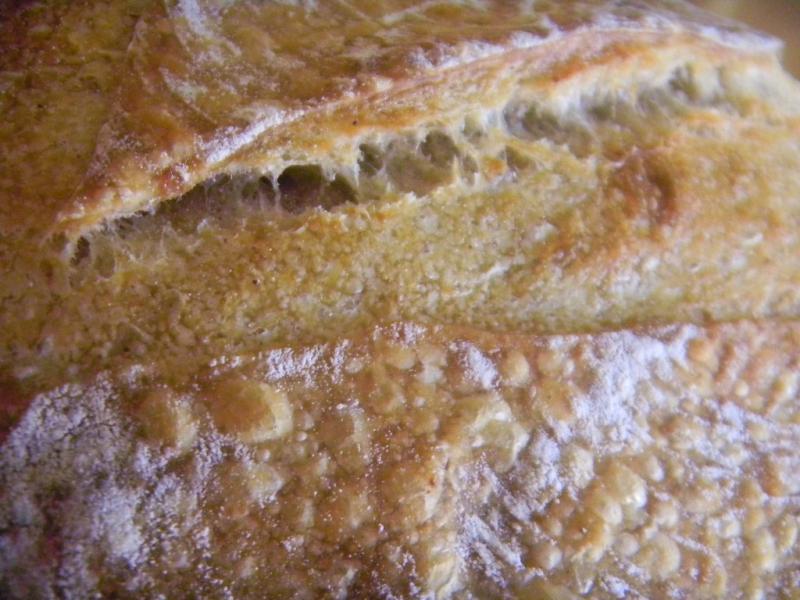
In 4 hours they both went into the 450 F oven with 2 of Sylvia’s steaming loaf pand and baling stone
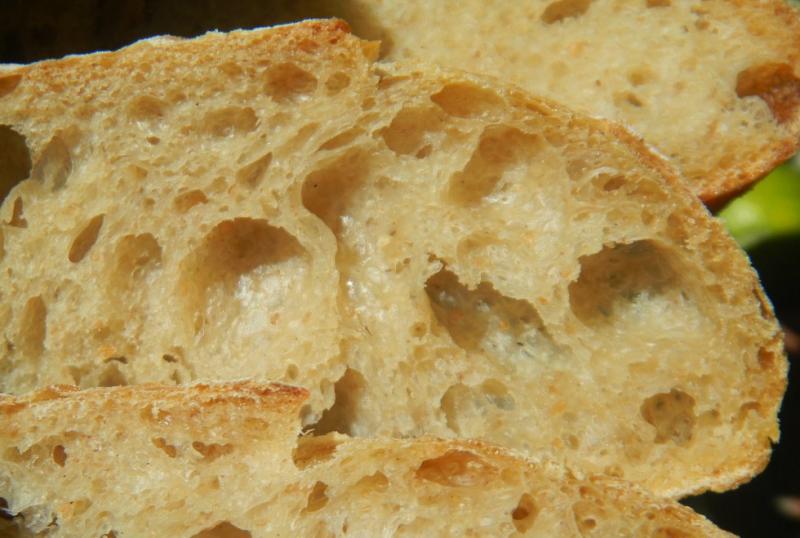
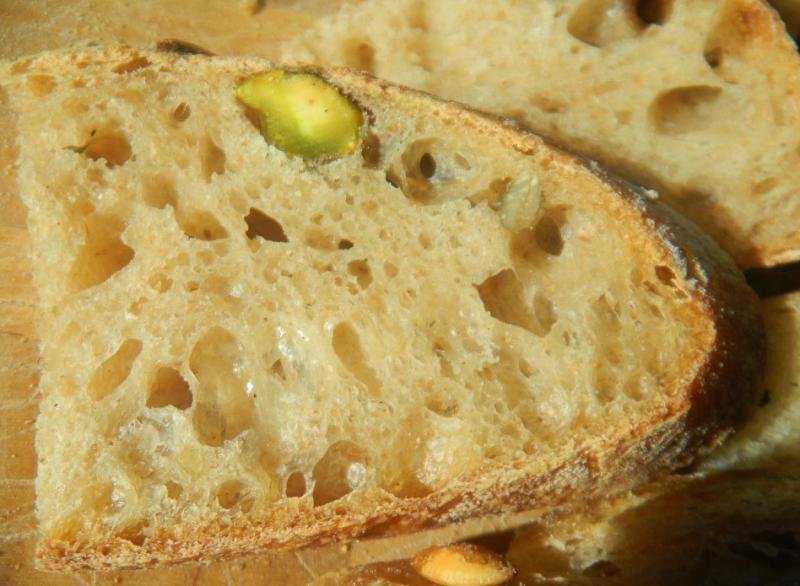
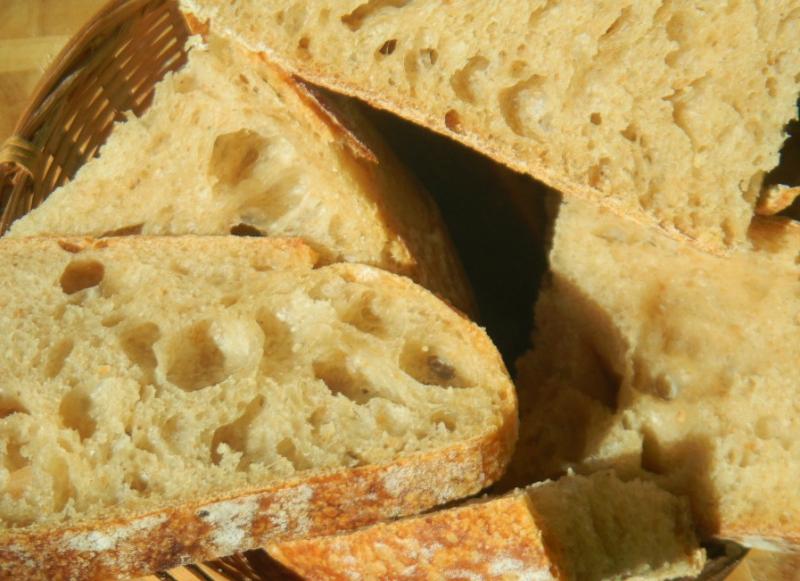
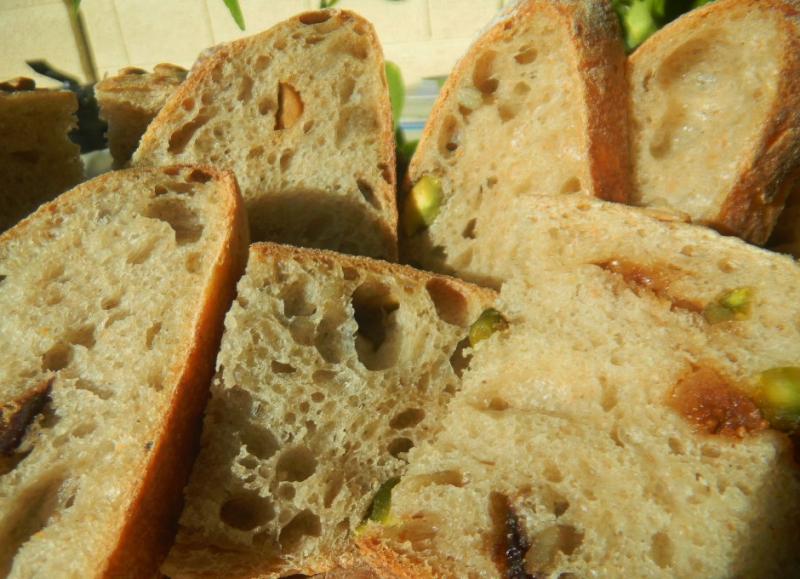
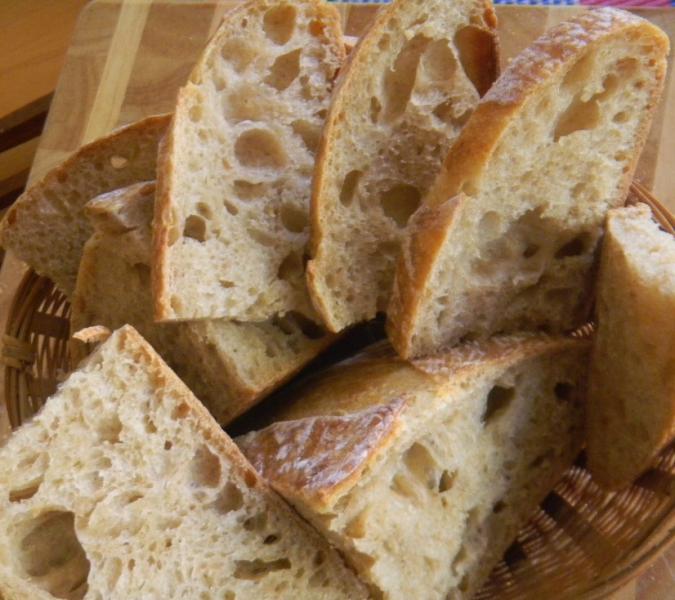
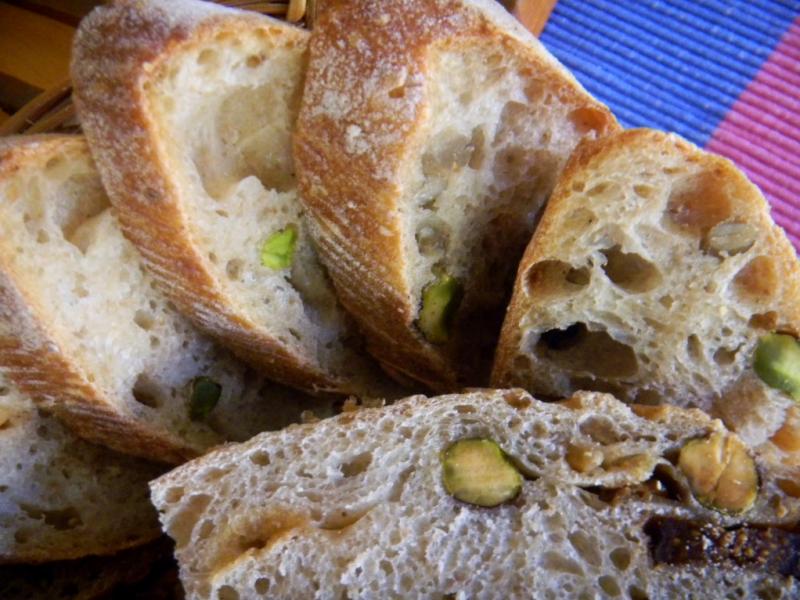
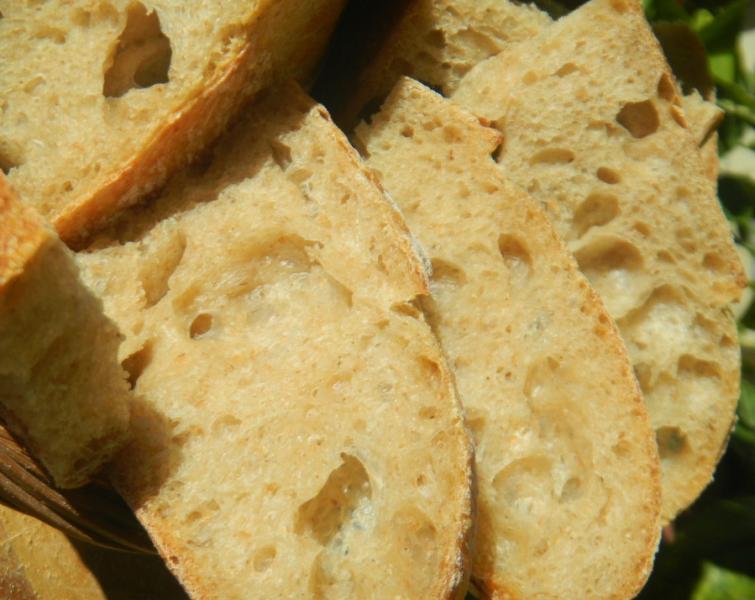

Starter | Build 1 | % |
SD Desem & Rye Sour | 7 | 1.00% |
Water | 0 | 0.00% |
Total Starter | 7 | 1.01% |
|
|
|
Starter Totals |
|
|
Hydration | 66.67% |
|
Levain % of Total | 0.57% |
|
|
|
|
Dough Flour |
| % |
Bread Flour | 315 | 45.26% |
Whole spelt | 22 | 3.16% |
Dark Rye | 22 | 3.16% |
Whole Wheat | 22 | 3.16% |
AP | 315 | 45.26% |
Dough Flour | 696 | 100.00% |
|
|
|
Salt | 12 | 1.72% |
Water | 505 | 72.56% |
Dough Hydration | 72.56% |
|
|
|
|
Total Flour | 700.2 |
|
Water | 507.8 |
|
T. Dough Hydration | 72.52% |
|
Whole Grain % | 10.50% |
|
|
|
|
Hydration w/ Adds | 72.11% |
|
Total Weight | 1,231 |
|
|
|
|
Add - Ins |
| % |
Red Rye Malt | 2 | 0.29% |
White Rye Malt | 2 | 0.29% |
Total | 4 | 0.57% |
|
|
|
Add Ins for Half of the Dough |
|
|
Pistachios | 20 |
|
Sunflower 10, Pumpkin 10 | 20 |
|
Mission and Adriatic Figs | 50 |
|
Total | 90 |
|
|
|
|
SFSD Total Weight | 615.5 |
|
Fig, Nut & Seeded Weight | 705.5 |
|
- dabrownman's Blog
- Log in or register to post comments
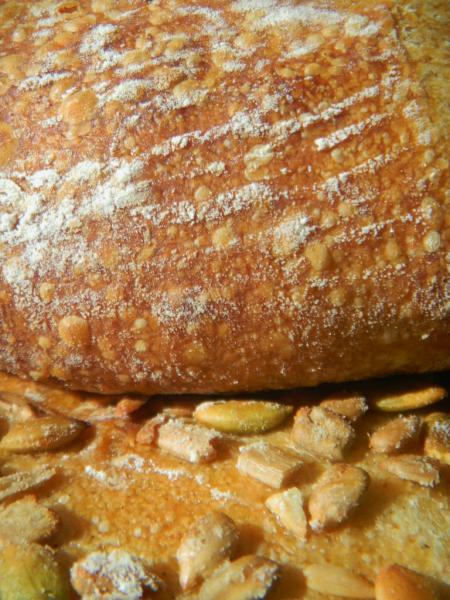
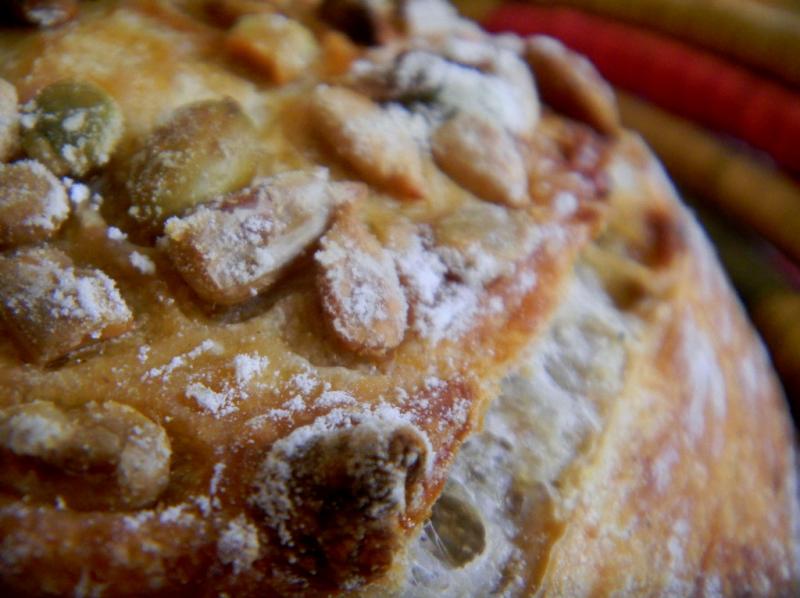
The crust and crumb of each is spectacular!
Paul
I was surprised how nicely sour these breads were right out of the oven. 1% starter and 20 hours on the counter before shaping really works well for sour development. Forgot to put the anise seeds in the seeded variety and that would have been a good touch.
Thanks and cheers!
Both are very nice SD breads and one is more festive for Holiday baking too!
Happy Baking.
...w/ or w/o 'stacios - but they must provide nice little flavor bursts in there. Airy crumbs, hypnotic wavy dust-lines from your basketton, textbook crust gelation blisters. Nice bake! Creative process -- a keeper for sure. Apprentice must have got a workout during that 15 min of FS&F. Ain't no no-knead, that's fsure! Gotta be sour after 20h BF. But with such a low inoculum to begin with, maybe not so.
Great post. Even w/o a sunset.
Tom
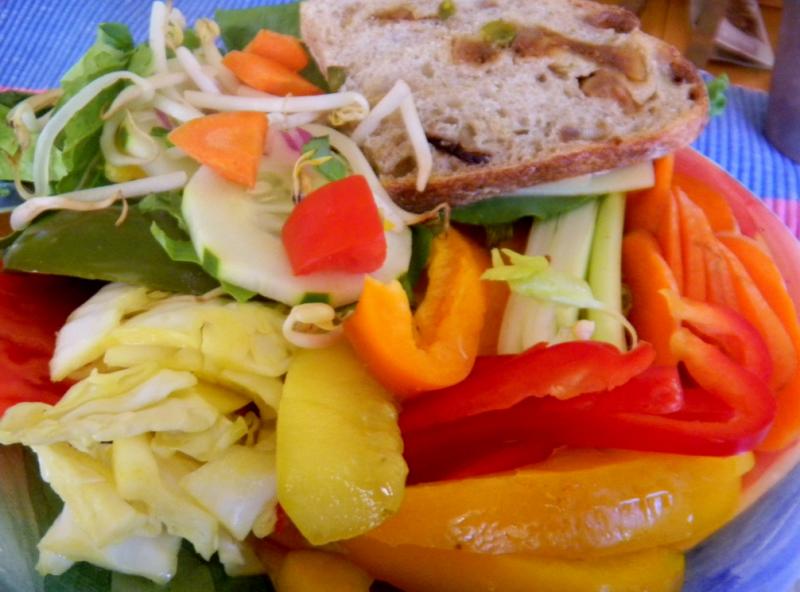
are tasty but it the figs that make that bread special. It was as sour a bread as I have managed to make with such a 4 pawed apprentice! Ian experimented with and still uses big amounts of SD levain in his bakes to bring out the sour and I thought I would try the opposite. I didn't put in a sunset but have one picked out to go with today's lunch shot. A slice of each for this sandwich.
I'm really getting into the French side of Slap and folds since I've been in training for Michael Wilson's Holiday Panettone. I'm hoping that it won't be 40 minutes of them like his 100% spelt and 100% hydro bread was :-)
Glad you like the bread and thanks for the comments Tom. What have you been baking?
I'm intrigued by your procedure. I'll have to try it.
As I understand it, you can get increased sourness two ways: Use a high percentage of levain and a short fermentation or use a very low percentage of levain and a very long fermentation. It might seem paradoxical, but the chemistry works. It's just a question of whether you add the acids when you mix the final dough or you let them develop during a prolonged bulk fermentation.
David
going over dough.doc's spreadsheet for lab1 and 2 and yeast over time vs temperature which tries to predict how long it will take for volume to double for bread based on temperatures. The other thing it shows is the relationship between this ration and temperature and what temperature one might want or need to get a higher lab to yeast ratio. The higher the ratio the more sour should come out.
With the same starter amount. You can either go really low 39 F where the lab to yeast ratio ratio is 3.14 but the yeast is only perking along at .00827 and it will take forever to double in volume. Or you can go to 90 F where the lab to yeast ratio is nearly the same at 3.225 but the yeast is at .202 - working at 23 times a greater rate. So if you want the same times to get the same amount of sour you should be able to up the starter amount and keep it cold or cut the starter amount and up the temperature.
Oddly, between 68 F and 80 F the lab to yeast ratio is around 1 where they are working at equal rates so sour will not be pronounced when the dough doubles in volume. The science of bread is very interesting.
With your experimentation with SFSD and sour in general, you will have a great base to try this out and be able to compare the sour between the two methods - larger SD starter low temperature or small starter amount with higher temperature. They should be the same sour when the volume doubles but I have no idea what amount of larger starter to use. I'm guessing 161 g (23 times more) for 700 g of flour at 72% hydration and keep it at 38 F for 20 hours? That is a pretty wild guess that I'm guessing too :-)
Your method of low temp and long retard with a high temp final proof at 85 F seems like another good candidate to get sour too. It was a fun experiment and I learned a lot thanks to Dough .Doc's spreadsheet help.
Glad you liked the bake David. You will like the sour!
That is some very impressive baking! Love the crumb and crusts!
Sylvia
your steam makes it all possible Sylvia ! These breads taste great too - if you like sour. Glad you liked the output, my apprentice will be proud :-)
Looks like you got a great open crumb on this one and a nice well developed crust. Very nice bake DA. Beautiful photos too!
Regards,
Ian
Nothing like waiting around for dough to rise on the counter :-) The next 2 days the sour went even more sour. Very nice bread that reminds me of SF very much. Glad you liked the photos too. Good bread is way, way easier to photograph :-) This is another way to make good bread.
Bake on my friend!
as AZ and since it has cooled down some for youtoo, you could crank this recipe out on your counter and see how it compares to your normal method for bringing out the sour. I've always liked science, especially chemistry and physics. Dough.docs spreadsheet especially useful. It is amazing what TFL folks know and share about bread or discover about bread! I guess that is what TFL is all about.
It is still in the low 90's here but Happy Winter Baking to you anyhow :-)
The weight in starter in Build 1 said 7g, not 1g in the text. I think, that's a typo, right?
the 1 g was for the previous levain experiment where I used 1 g for 100g of flour and it took 20 hours to double. In this the ratio was the same 7 g of starter and 700g of flour if you include the 4 g or malt which is nothing more than sprouted flour. Thanks for the catch - I will fix the text.