I received Reinhart's book on Sprouted Grain when it came out, and tried several times to make the basic loaf from berries that I milled at home from sprouted berries. Unfortunately, most of the attempts were complete failures.
In the summer i can dry the chitted sprouted berries in the AZ sun and use a dehydrator in the winter. I reduce the hydration in sprouted grain breads by about 5-7% from my normal hydration. Fresh home sprouted grains just don't take as much water for some reason.
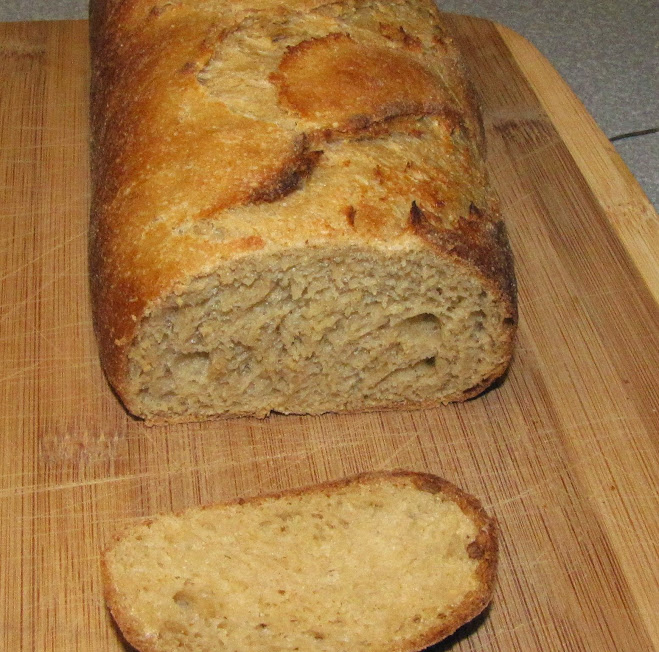
Your sprouted bread looks very tasty indeed! Well done and happy baking.
Baliw2, interesting point. From what I have read, starch damage can increase water absorption - though I am not sure if that means the dough will be sticky with the same amount of water, or less sticky than a less damaged flour. I did a little searching and am pretty certain there is no reliable test for starch damage. Also, I am not aware of any reliable test for how fine flour is graded, other than graduated sieves, which I don't have. I am thinking of sprouting another batch, and then run it through the mill at three different settings and then make 3 test loaves at the same hydration to see how they perform. I used a Lee Household Flour mill for the sprouted grain I baked yesterday, but I also have another mill I can try to see if that impacts starch damage.
is the crucial factor for home success imo. The first time I sprouted berries it took 3-4 days and the resulting flour met with similar difficulties producing a good loaf when using more than 50% of the sprouted flour. I realised later that I had stupidly tried to sprout the berries on the windowsill in full daylight. The next time I sprouted, I kept the soaking berries in the dark and this time the little shoots were popping out in 24hrs. So I began drying them straight after and the results were far far better. So for me key factor is a short sprouting time, so the grains don't change too much.
To be fair, I've used nothing but store-bought sprouted wheat flour (from Arrowhead Mills and Red Fife), and have had great success with his recipes. I think the sprouting, drying and milling process is quite complex. I'm happy to leave it to the millers at the moment.
Breadbro, I understand your position. For those of us that have a mill, the price of sprouted grain flour from the millers seems pretty high. I made another loaf from Sprouted Red Wheat, Spring, and upped the hydration to 80 and it was fine. I have been sprouting the berries in my kitchen, but I keep a towel over the tray so it is not in full light.
Interesting point. I, too, sprouted my grains in full daylight, next time I try the dark treatment. So far I had good results with my first two loaves from the book, the first one with store-bought sprouted wheat flour only, and the second with store-bought WW and self sprouted rye.
I could handle the high hydration without problems, but I haven't made a bread with 100% self-sprouted flour, yet.
For the sprouting process, I followed the Nourished Kitchen advice, soaking the berries for 24 hours, with a little added vinegar in the water, then placing them in a large over-the-sink strainer:
Rye and kamut sprouted just fine, but my trials at brown rice and corn were unsuccessful, probably because the grains were treated and unable to sprout.
It is so hard to get sprouted grain flours other than whole wheat, but I just discovered in our supermarket, in the rice section, bags of different kinds of sprouted rice, I will grind those and try them.
The next bread on my list is the Sprouted Struan bread from Reinhart's book.

In the summer i can dry the chitted sprouted berries in the AZ sun and use a dehydrator in the winter. I reduce the hydration in sprouted grain breads by about 5-7% from my normal hydration. Fresh home sprouted grains just don't take as much water for some reason.
Your sprouted bread looks very tasty indeed! Well done and happy baking.
that you describe could indicate starch damage.
Maybe that was the problem?
Baliw2, interesting point. From what I have read, starch damage can increase water absorption - though I am not sure if that means the dough will be sticky with the same amount of water, or less sticky than a less damaged flour. I did a little searching and am pretty certain there is no reliable test for starch damage. Also, I am not aware of any reliable test for how fine flour is graded, other than graduated sieves, which I don't have. I am thinking of sprouting another batch, and then run it through the mill at three different settings and then make 3 test loaves at the same hydration to see how they perform. I used a Lee Household Flour mill for the sprouted grain I baked yesterday, but I also have another mill I can try to see if that impacts starch damage.
To be fair, I've used nothing but store-bought sprouted wheat flour (from Arrowhead Mills and Red Fife), and have had great success with his recipes. I think the sprouting, drying and milling process is quite complex. I'm happy to leave it to the millers at the moment.
Breadbro, I understand your position. For those of us that have a mill, the price of sprouted grain flour from the millers seems pretty high. I made another loaf from Sprouted Red Wheat, Spring, and upped the hydration to 80 and it was fine. I have been sprouting the berries in my kitchen, but I keep a towel over the tray so it is not in full light.
Interesting point. I, too, sprouted my grains in full daylight, next time I try the dark treatment. So far I had good results with my first two loaves from the book, the first one with store-bought sprouted wheat flour only, and the second with store-bought WW and self sprouted rye.
I could handle the high hydration without problems, but I haven't made a bread with 100% self-sprouted flour, yet.
For the sprouting process, I followed the Nourished Kitchen advice, soaking the berries for 24 hours, with a little added vinegar in the water, then placing them in a large over-the-sink strainer:
http://nourishedkitchen.com/how-to-make-sprouted-grain-flour/
Rye and kamut sprouted just fine, but my trials at brown rice and corn were unsuccessful, probably because the grains were treated and unable to sprout.
It is so hard to get sprouted grain flours other than whole wheat, but I just discovered in our supermarket, in the rice section, bags of different kinds of sprouted rice, I will grind those and try them.
The next bread on my list is the Sprouted Struan bread from Reinhart's book.
Karin