
I have once again decided to document my bakes. I think I did not do this correctly a few moments ago, so here is a link to my last entry where I added my latest bake and explain what I did. https://weightloss-slim.fit/node/57785/multigrain-loaf-la-dmsnyder%3C/a%3E%3Cbr%3E%3Cbr%3E%C2%A0%3C/p%3E%3Carticle class="media media--type-image media--view-mode-default">
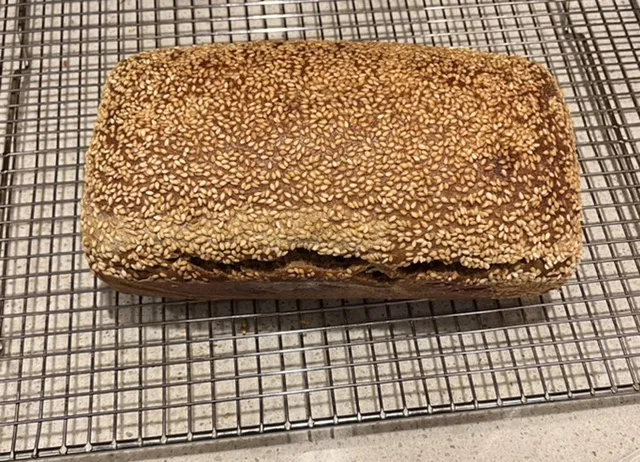
Image
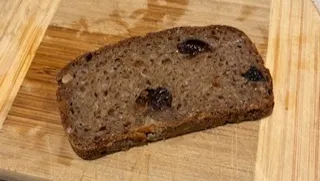
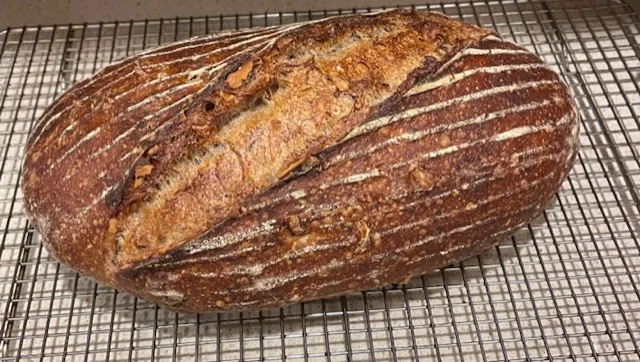
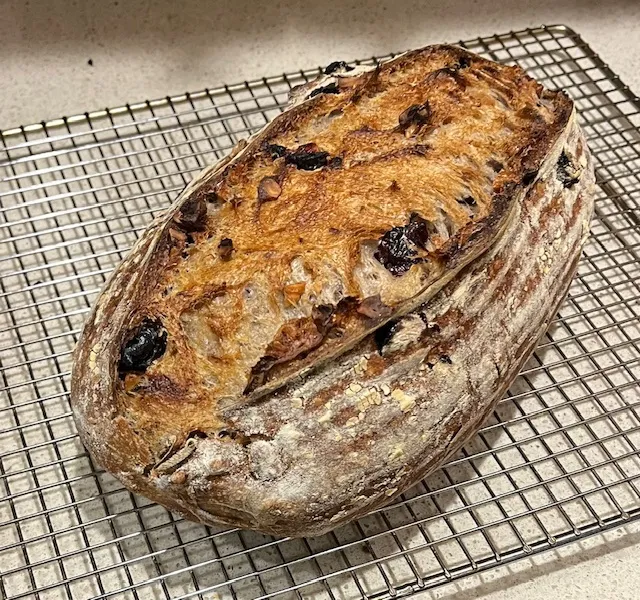
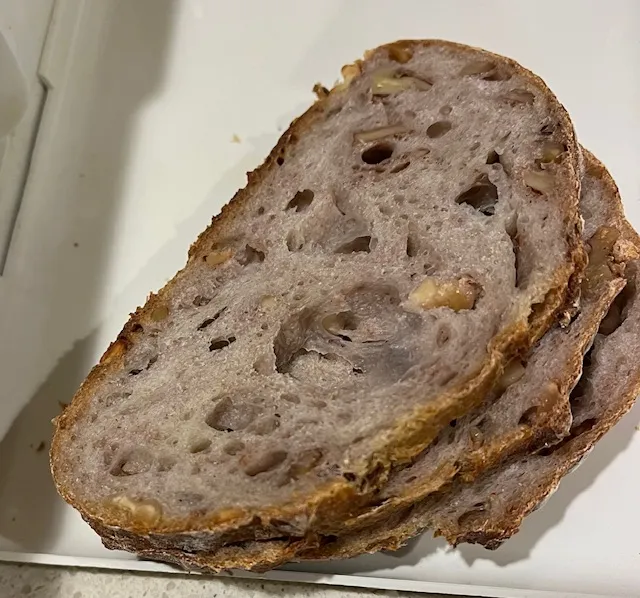
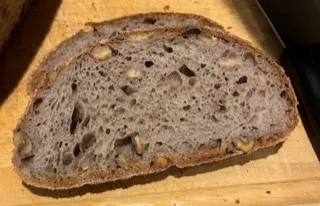
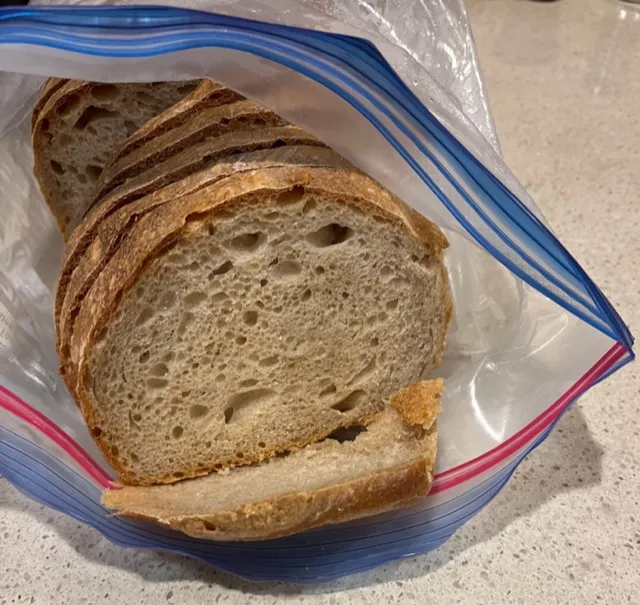
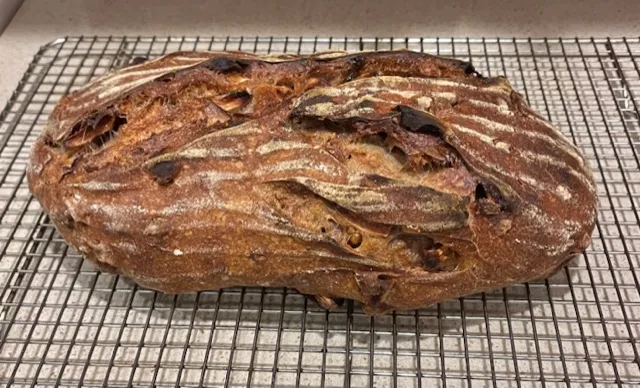
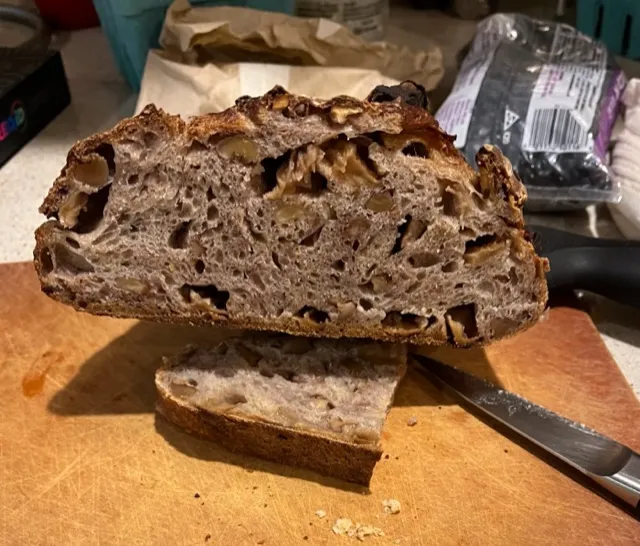
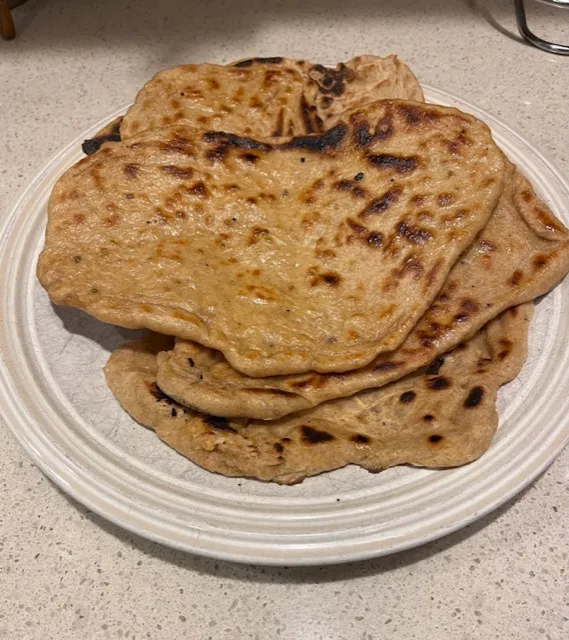
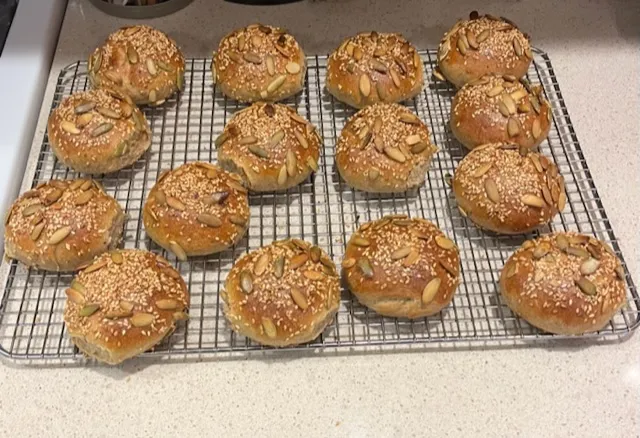
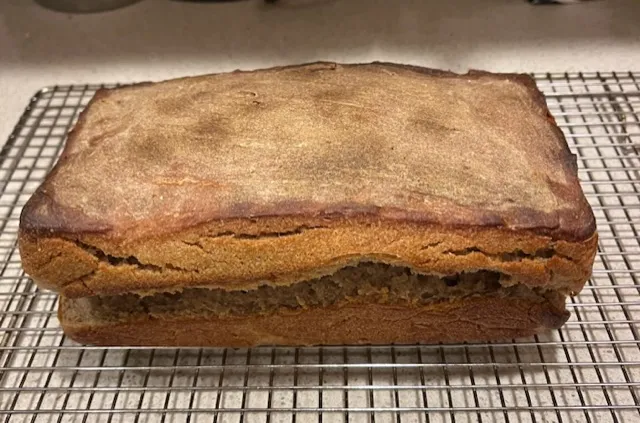
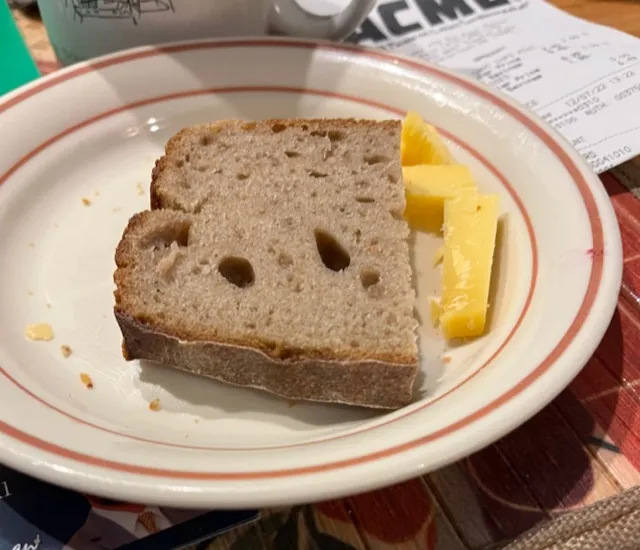
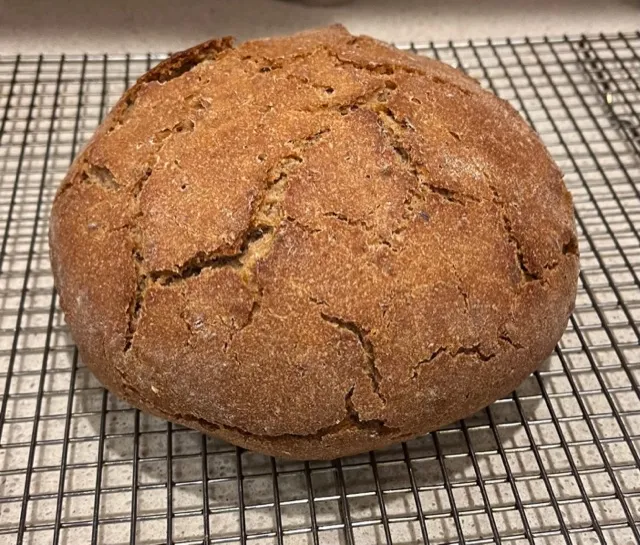
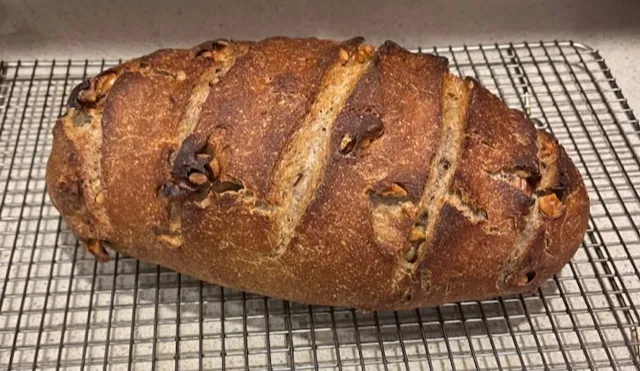
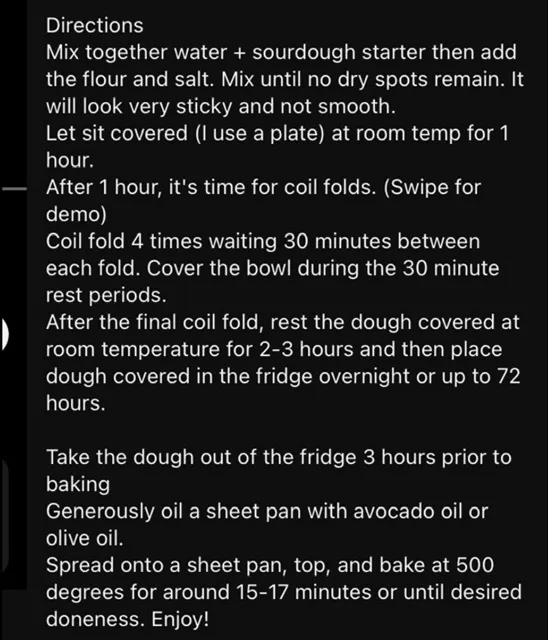
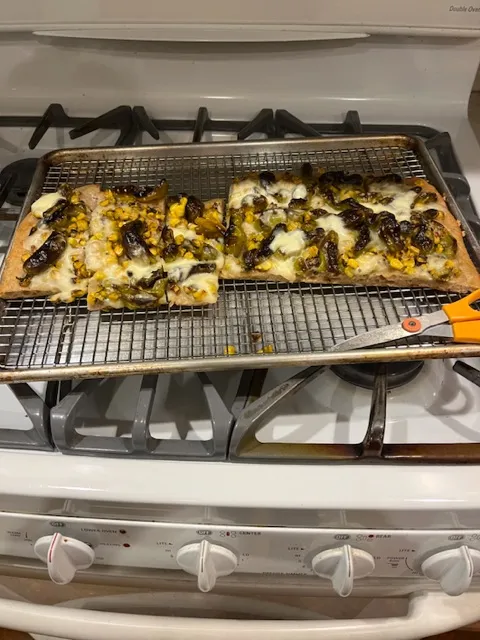
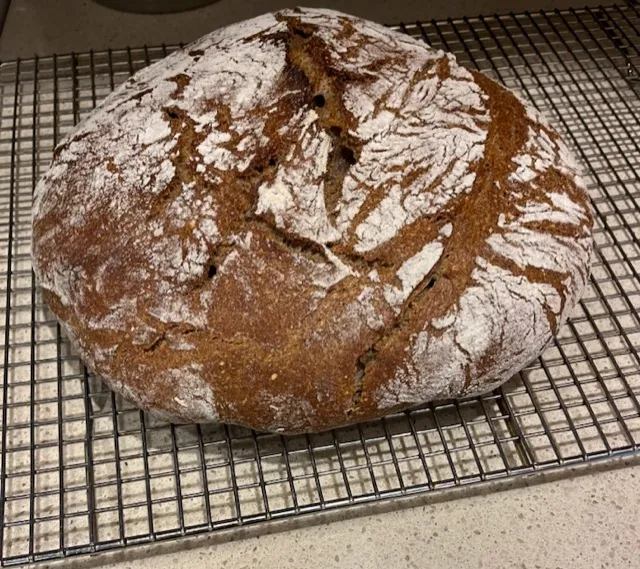
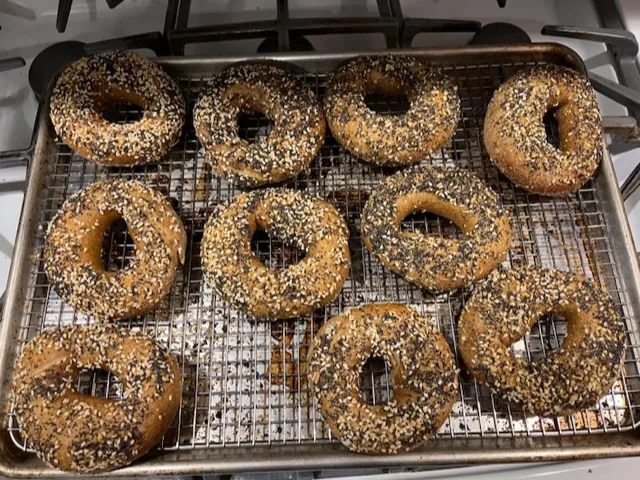
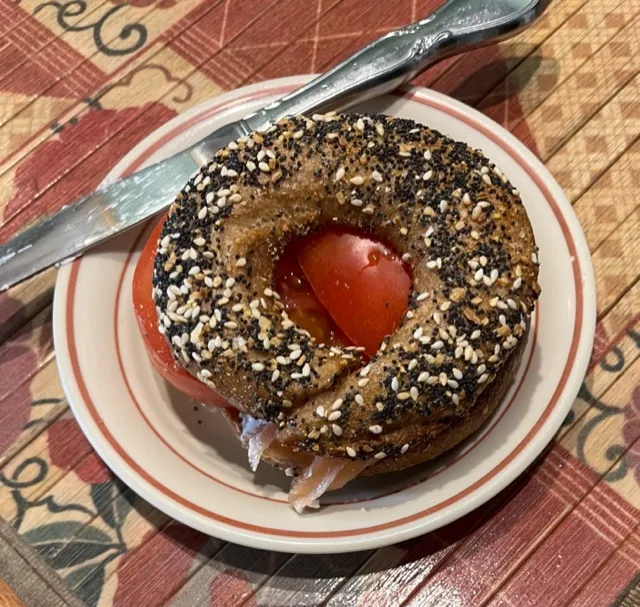
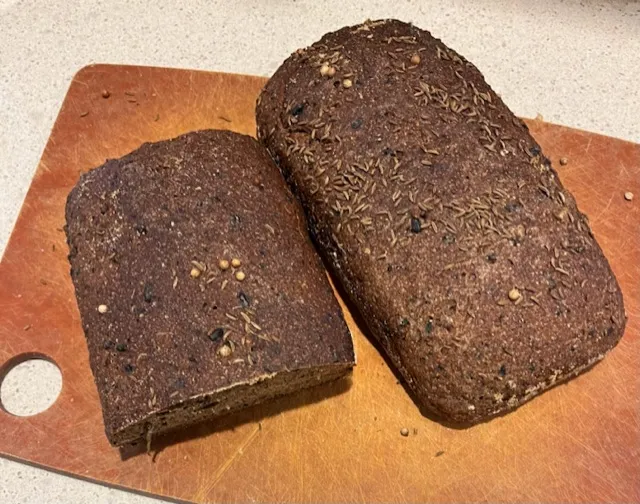
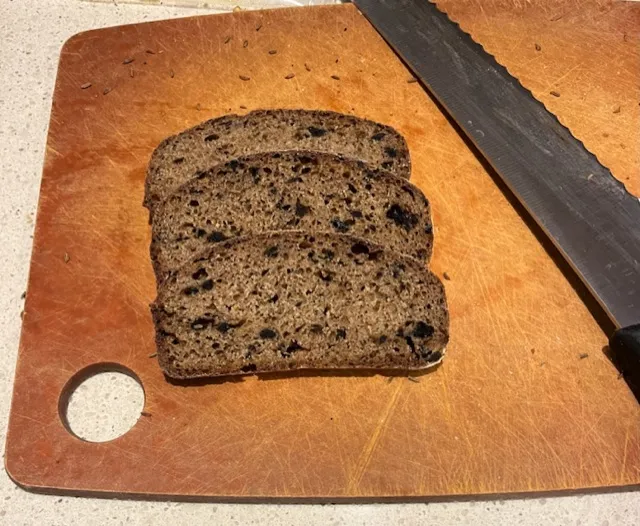
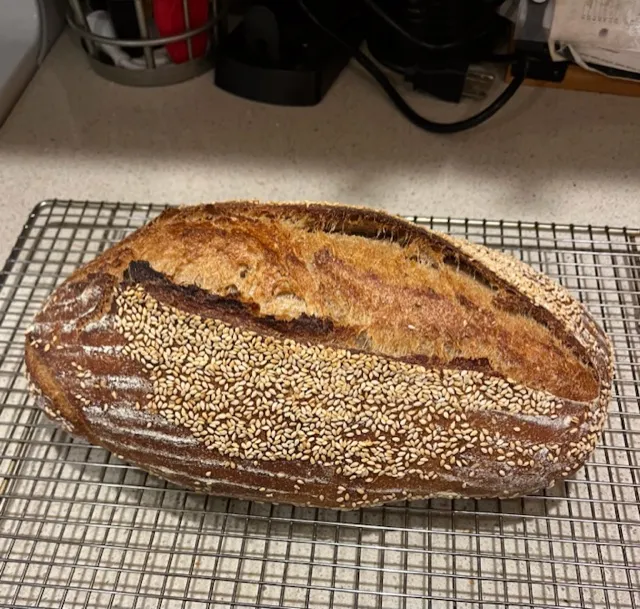
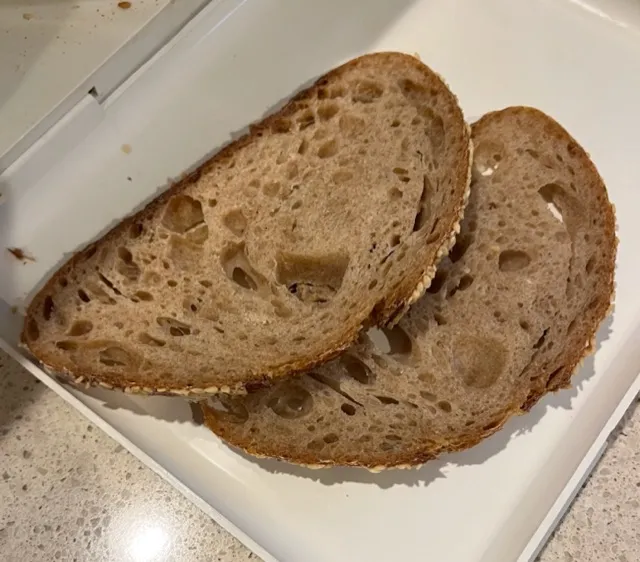
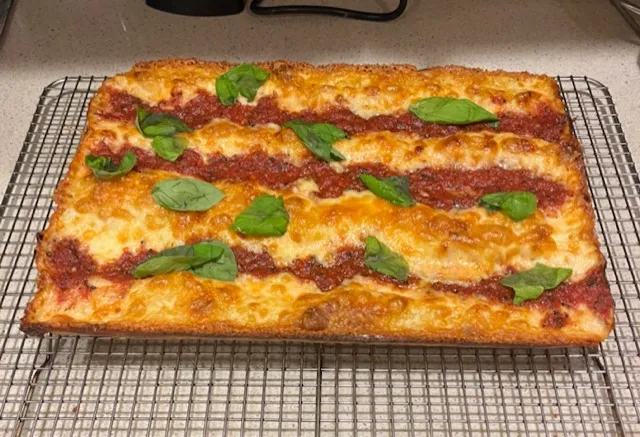
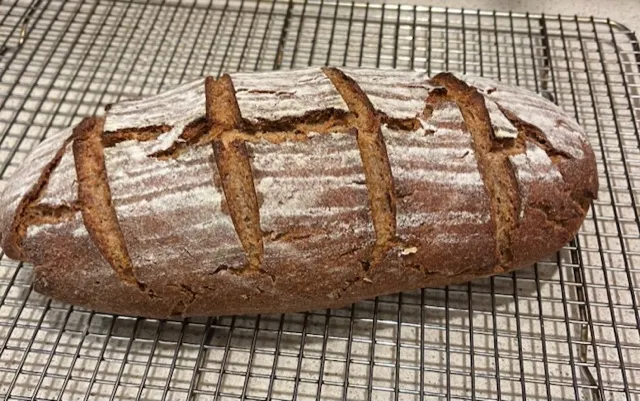
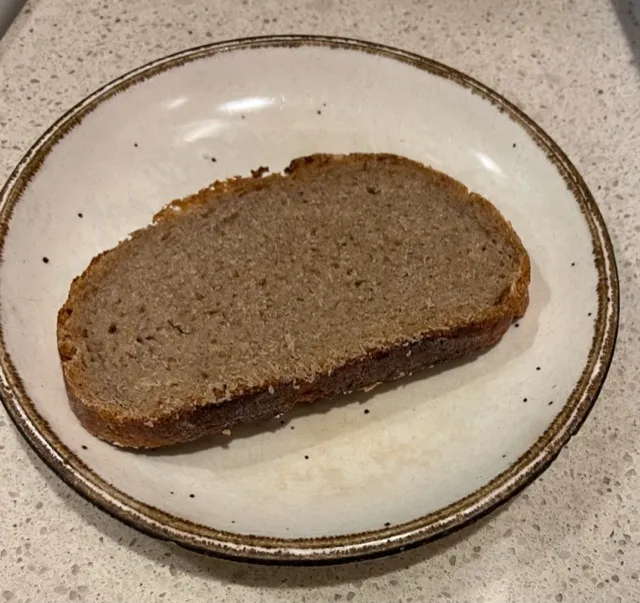
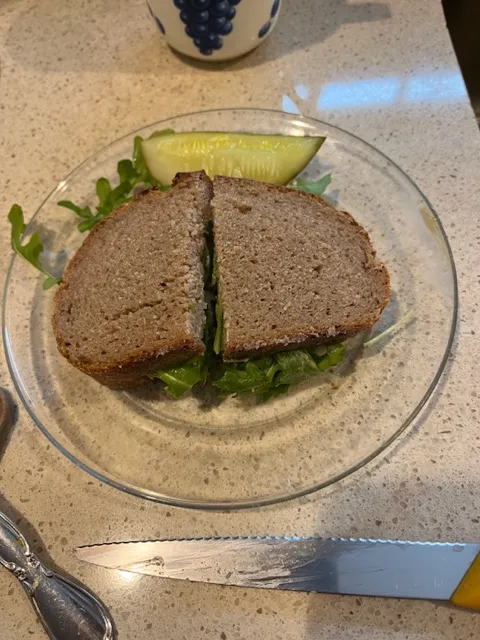
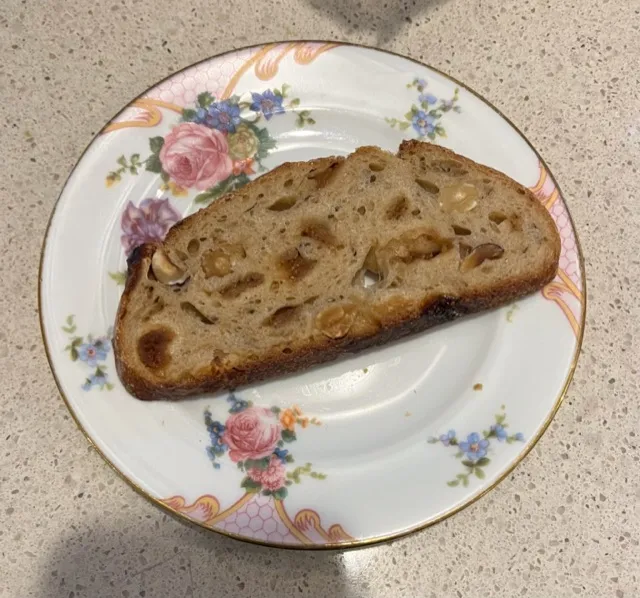
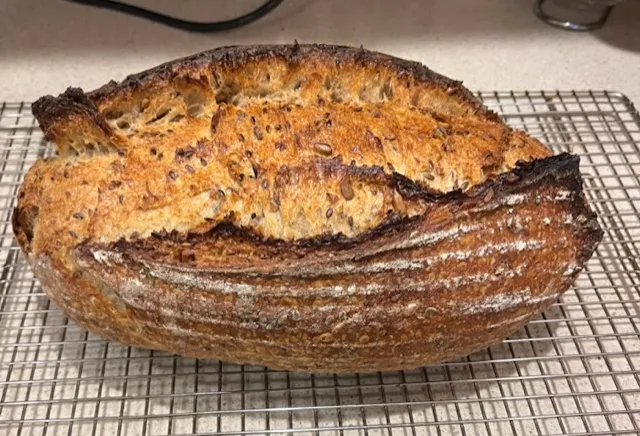

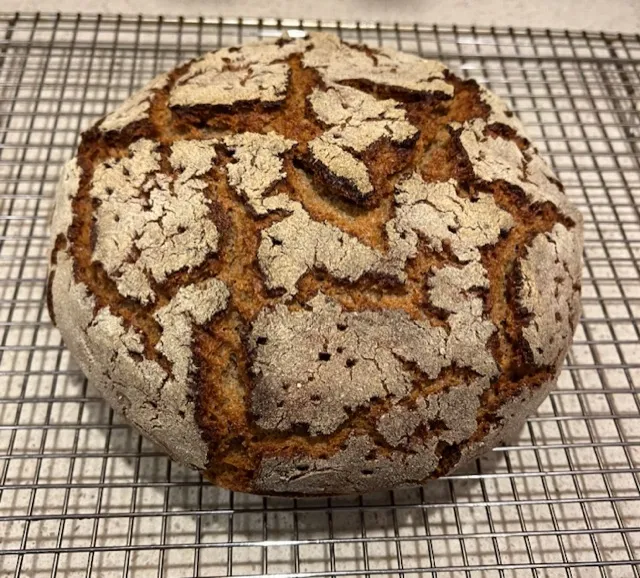
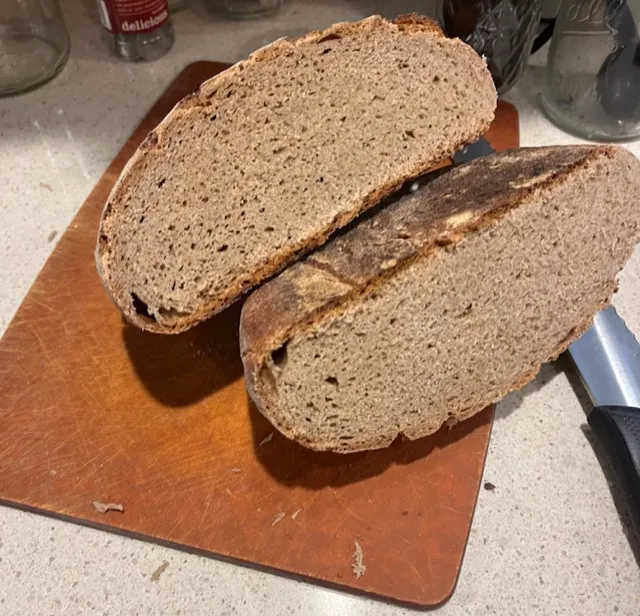
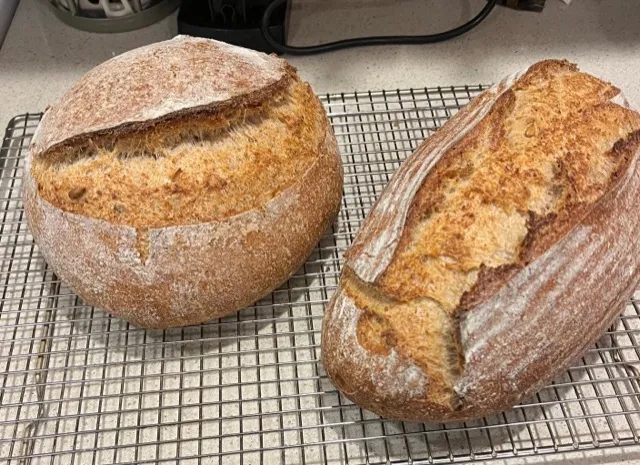
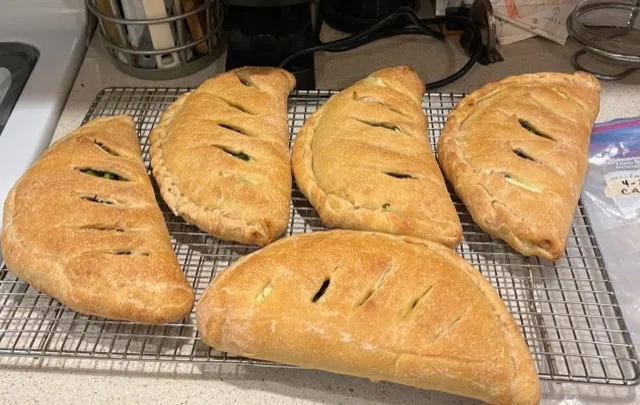
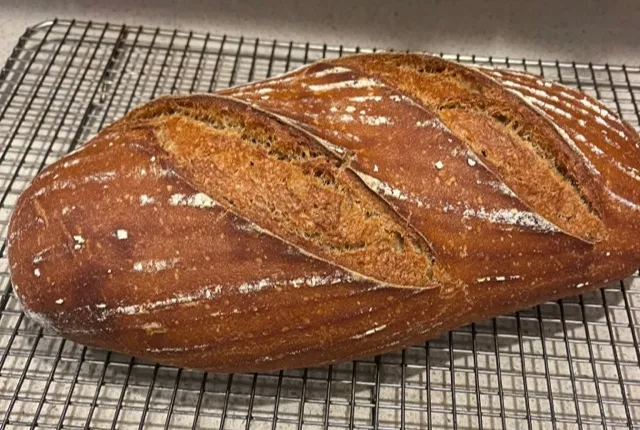
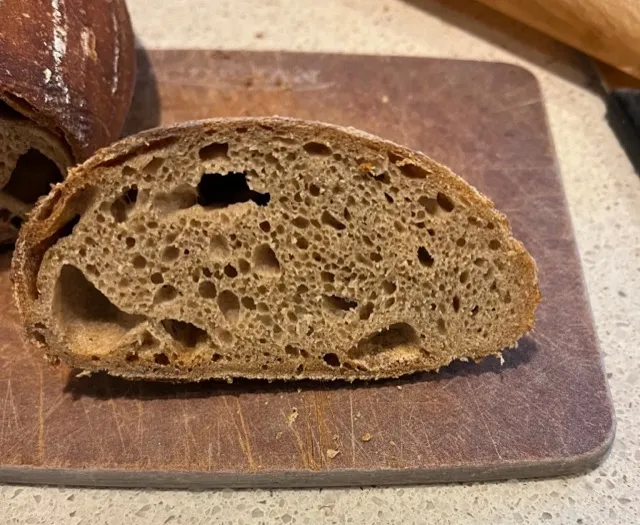
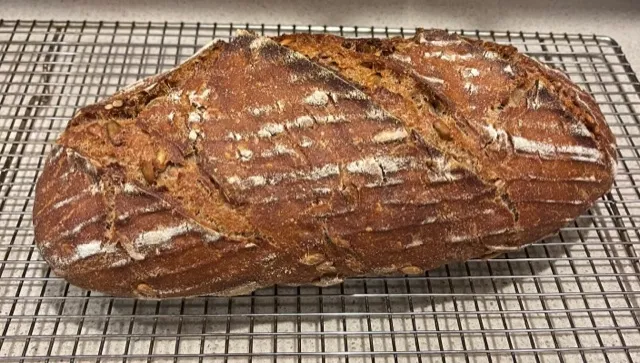
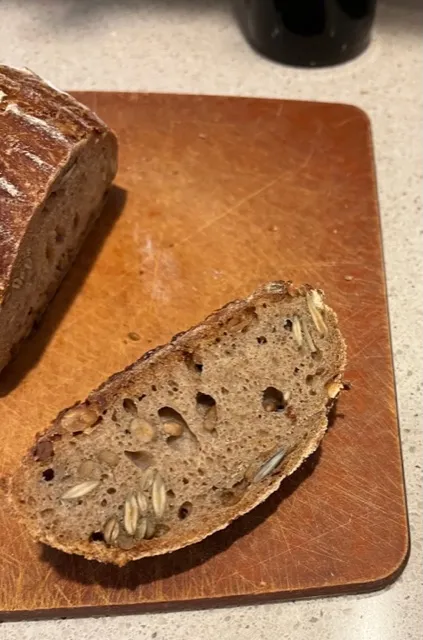
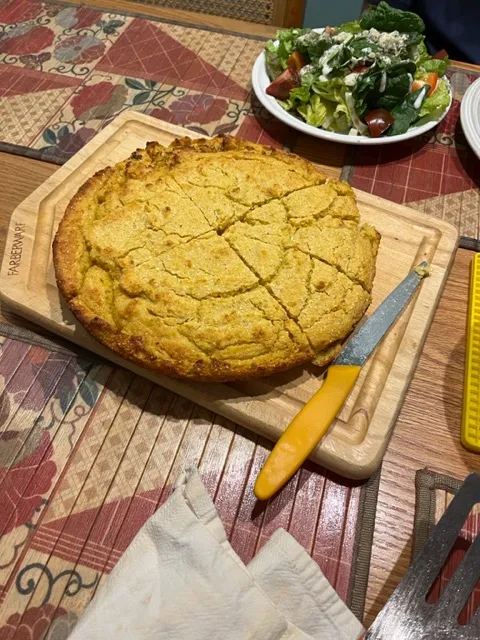
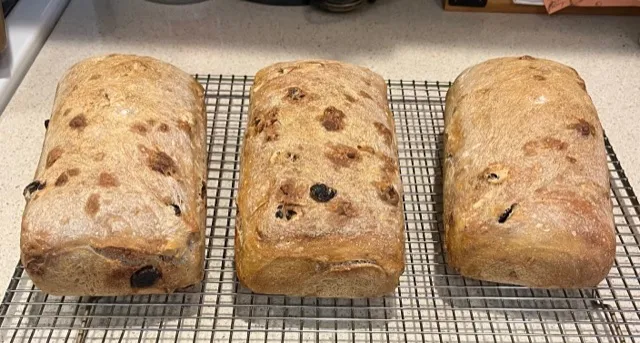
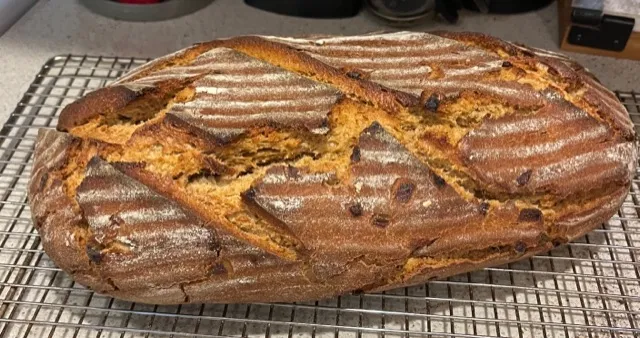
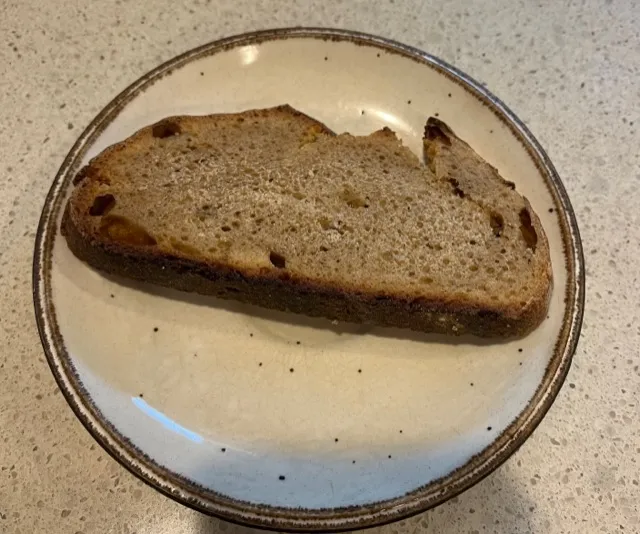
Today I baked the walnut and raisin ciabatta from Hamelman’s “Bread”, third edition I followed the recipe exactly as written, scaling down to two loaves, dividing the metric weights by 10 and then halving those numbers ( 5%)). I recommend the formula, a nice twist on standard ciabatta. The crust had a nice bite, but the crumb was not as open as I though it could be, maybe because this formula’s hydration (75%) was not as high as ciabatta typically is. As a consequence, the dough really was easy to handle. I inverted the dough from my rectangular rising container over a floured board, cut it in half and placed the loaves onto parchment paper. Then I cut the parchment paper in two and moved the loaves back to the board and covered them for the final proof.
I think I have made the three times now because I am a big fan of this formula. The final proof took only an hour and not the hour and a half specified in the recipe.
I just made this again (Sept 20, 2023), adding about 110g of white whole wheat in place of some of the bread flour.
I am in the middle of making this again 10/5/23 and this time I substituted more whole wheat flour- 150 grams. I used 275 grams of bread flour.
The recipe is from Serious Eats: https://www.seriouseats.com/detroit-style-pizza-recipe
I added jalapeño peppers (uncooked) and omitted the pepperoni. I could not find brick cheese, but my Monterey Jack worked fine.
I made Hamelman’s Vermont Sourdough. I pretty much followed his formula, scaling it down to 1 kg. I did not do an overnight proof. Instead, I proofed the shape dough for about 1.5 hours when it appeared to test done.
Build
KA AP flour 87g
Water 109g
Culture 24g
Dough
KA AP Flour 436g
W.W flour 28g
Rye flour 30g
Water 298g
Salt 11g
Levain 197g
I am just not getting it. Someday, maybe, I'll hit on it accidently.
Just made matzah! This is from Peter Reinhart’s Whole Grain Breads. I added sesame seeds and za’atar to most of them.
I made this formula today as written, just substituting stout for the lager because that is what I had and scaling the recipe to 1K. As usual, I baked it in the Challenger pot. I was amazed that the levain that included a bit of salt rose nicely overnight at 70°. I forgot to curve the loaf as directed in the recipe and probably should have scored more deeply.
Levain
Whole Wheat flour-144g
Water- recipe called for 89g, scaling to a 1K loaf , but I used 85g because my starter was liquid
Salt- 2.58g
18g liquid culture to substitute for the 14g of stiff
Dough
Whole wheat flour- 86g
Bread Flour- 230g
Rye-69g
Barley- 46g Used hulled barley and toasted it in pan
Lager or stout- 207g
Water- 118g
Salt- 7.76g
Levain- 236g
Today’s bake was from King Arthur: https://www.kingarthurbaking.com/recipes/sourdough-hamburger-buns-recipe
I pretty much made the recipe as written.
I am baking this today and have scale the recipe to 1 kg:
I tried a technique new to me for mixing the dough. I left out 10% of the water, did the autolyse, then kneaded in the salt and levain until mostly developed and then gradually added the water that I had originally left out. The dough seemed to be a nice texture after kneeling for a few extra minutes. At first it looked like the water would not incorporate, but it did. The term for this is bassinage. I don’t know if I added the extra water at the correct point, but I watched a baker who runs a bakery and I think I added the water like he did. I need to work on my shaping. I will add a link to the baker’s video the next time I edit this post. Here’s the link: https://youtu.be/7lIDKLDWjDU The shaping demonstration is at 43:05 into the video.
It looks like my shaping was not too bad. I also want to note that I proofed for 1 1/2 hours at 78°F. Will get to taste for dinner.
Wow, it looks great. I am currently bulk fermenting another B & T country sourdough.
I held back 10% of the water from the final dough mix, and needing just a bit more to incorporate the flour. The dough feels pretty strong so far (3rd fold coming soon) but is still very sticky (maybe because of the 100% rye starter) and a bit of rye flour in the mix). It seems pretty similar to last one I made that did work OK.
.
That’s a pretty loave Caryn, you must be pleased.
Benny
Thank you!
Yes, I was. I’m always a bit startled that naturally risen sourdough breads can work! I look forward to tasting it tonight. I also love that I am always learning something new like the bassinage technique.
I am behind posting a couple of breads that I have recently made. In the case of the semolina bread, it may be that I have not been so quick to post a bread that was a bit of a failure, at least in appearance. However, documenting breads that don’t have the best outcomes may actually be the most instructive. I had three problems with this bread:
1. I didn’t bother to test the proofing soon enough, and it may have over-proofed.
2. The dough was rather moist and I didn’t bother to line the banneton with linen as I often do, and as a result the dough stuck to the banneton when I was inverting it before transferring it the the baking pot.
3. When putting the lid on the baking pan, I slipped and hit the dough with the hot lid, causing the already compromised shape to be even more so!
In spite of all this, the bread still had very good flavor and texture.
I scaled the recipe for a 1K loaf.
I followed Hamelman’s Harvest Bread as he wrote it, adding the small amount of instant yeast that he called for. I made 1/20 of his metric formula, using 2 grams of instant yeast ((.12kg/20)/3)).
The taste and texture were good, but again I slipped putting the lid on the pot, plus I need to work on my shaping!
I just made Hamelman’s “Sourdough Seed Bread.”, p. 186 3rd edition. I made the levain overnight, and then I refrigerated it until noon, then let it sit at 76° for about an hour. This way I was able to allow the final dough to proof overnight in the banneton for the proper amount of time. I put it in the refrigerator 3 hours, then the wine cooler at 42-44° for the remaining time for a total of 15 hours. I wasn’t trying to be super fussy about the temperature; it was just that the cooler was first being used to cool wine at the beginning. I thought it better to have it proof mostly in the cooler where it would be a bit warmer than the refrigerator.
I highly recommend this formula. I think it may be a new favorite. The texture and taste were terrific!
Mostly because I really like this bread, I made it again last Friday. I fed my starter twice over 2 days, refrigerating in between and then I used it to make the levain for this recipe. The only reason for feeding it twice was that I had not fed it for a while and I wanted to make sure that it would work. The only change I made to the recipe is allowing the dough to sit out for an hour before the bake while the oven was heating. I preheated the pot at 475°F and then immediately turned it down to 460°when I put the bread in the oven. I left it covered for 20 minutes and uncovered for about 15 minutes.
I am considering this a “dry” run as I am planning on serving this as part of a lunch gathering in a few days, so I will repeat this process in a couple of days. I am hoping the result will be as good!
If only I could get that kind of result. I made a loaf of Pain au Levain w/ whole wheat today, with more gentle handling than usual (3 sets of coil folds only) and possibly better shaping. It felt pretty good, but we'll see tomorrow early when it goes into the oven.
Louis- Lately I have been following Hamelman’s directions fairly accurately and sticking with the one or two folds that he suggests. I usually do two because I think it it only help and not hinder. I have another seed bread in the oven now. I will have to see how this one goes. I think I made it close to how I did the last time, but with sourdoughs, unless you are running a bakery with a lot of controls, the results can be variable!
Also, since I don’t always bake once a week, I take out about 8 grams of starter from the refrigerator a couple of days before I make the levain for the bread and feed it 16 grams of water and 16 grams of flour (including some rye or whole wheat). I let it work at 82°F for about 8 hours- It usually just doubles in that time. Then I might repeat that a second day if it has been a while since I have used the starter from the refrigerator. Then I make the levain and let it work at 70° as suggested by Hamelman for 12 to 14 hours. I then put it in the refrigerator, since I don’t want to start making the bread dough right away. I usually then take it out of the refrigerator at noon and let it sit again at 70°F before I start making the dough at about 1 PM or so. When I bake this way, I don’t do many tests- I just follow this and it seems to work.
Bread just came out of the oven!
I decided to bake this bread again, though now I realize that I should have reviewed my previous notes on this loaf. For some reason I had decided to bake this in my large Pullman loaf, not realizing that it was obviously not the right pan. I am not sure why but this time the loaf did not proof enough overnight, and so the result was a very diminutive loaf which I just decided to call it a “cocktail” loaf. Renaming quasi-failures is a way to obfuscate the results! I certainly would not call it a success, but it still tasted really good, so that was somewhat redeeming!
Take three! This is the third time making this formula, and I think it is the best result so far. I think it is also the best 100% whole wheat bread that I have tried to date. The flavor and consistency were really good. I think I will continue to use this formula when I want an all whole wheat bread and maybe try some variations with some add-ins. I baked it in my Challenger pan, lowering the starting temperature to 460°F. Otherwise, I pretty much followed the recipe using KA whole wheat flour.
The shape was not as I would have liked, however. It spread out while baking. I would like to figure out how to get more of an upward rise with this formula.
I have been inspired to revisit this dough formula by fellow Fresh Loafer, louiscohen | The Fresh Loaf. He has given me some tips which certainly contributed to my best result ever with this formula. Hamelman in this recipe instructs to skip any folds during bulk fermentation with this formula. Louis informed me that he does do folds, so I did. I think it resulted in a better structure for proofing. Hamelman also suggests that you can increase the hydration to 85% from 80%, as Louis does, so I did that too. I also loved his idea of adding walnuts, so I added 25% (baker’s %) toasted walnuts during the second fold that I did.
In addition, I used King Arthur whole Wheat flour which is 13.2% protein. Before I used whatever whole wheat flour was the cheapest. It may not have made a difference since I have not done a controlled comparison, but the dough seemed to have handled much better than I can remember even with the increase in hydration.
Now there were some changes that happened unintentionally. I attempted to get the dough to the DDT (desired dough temperature) of 70°, but I ended up with a dough measuring 75°. I worried because Hamelman suggested that a lower temperature would be better for this bread formula and schedule. I managed to get it down to 72° by leaving it at my room temperature of about 67-68° and then leaving it in my warmer at 70°. I think it never went below 72°. This may have accounted for the fact that the bulk fermentation was faster than the recipe specified. By testing with a shot glass with a dough sample, I discovered that the dough had roughly doubled at about seven and a half hours. So, fearing over-proofing, I preshaped it at that point and then shaped it, added seeds to the top and put the dough in the banneton for the refrigerated proof. I baked it 14 hours later directly from the refrigerator, though considered leaving it out for a bit first. Again, I did not want to risk over-proofing.
I do think this was my best 100% whole wheat yet, and I learned a lot from making it again. Lately, I have become aware of paying more attention to the bulk fermentation process. In some cases when a recipe suggests a time for the BF, it may be too short or have the potential to be too long depending mostly on the dough temperature.
Thanks for the mention. I think Hamelman says something like, if your baking style is comfortable with higher hydration, ... but I don't think he goes into specifics.
I don't ever go past 15% for the weight of garnishes. With 25% walnuts and 85% hydration you must be a lot better at building gluten than I am (which is no surprise).
I probably should watch DDT more closely than I do, but I figure with the B & T proofer set to the DDT the dough will get there eventually.
We are having a colder winter in San Diego than usual (no fake sympathy from those in snowy areas needed). Sometimes it seems that the B & T proofer can't fight mother nature, so I have to turn the temp in the proofer up a few degrees, eg, from 70 F to ~73 F to get the expansion that I expect in the formula timeframe.
I think I was lucky with this last outcome of this bread. I looked up other of Hamelman’s recipes and he has called for 25% of inclusions, so I went with it. I have a feeling the reason for my best result for this formula was that the dough doubled during its bulk fermentation. It might be worth testing the degree of rise by putting a small amount into a jigger or very narrow container in order to more easily see how much the dough has risen. That way, if the dough doesn’t rise as well when it is colder, you can consider extending the bulk fermentation time. In my case, I accidentally produced a warmer dough and it fermented faster than expected, so I stopped the bulk fermentation earlier.
I baked this bread the same day that I made the dough. As usual I scaled the recipe to 1K. The recipe is from King Arthur: https://www.kingarthurbaking.com/pro/formulas/night-moves-anadama
I may try using all bread flour next time instead of half and half because I ended up adding about 64g of additional AP flour.
This is my first bread from The Rye Baker. I made it mostly because I had all of the ingredients for it! As I often do, I scaled the recipe to 1K and made one big loaf. The bulk fermentation took longer for me, but maybe because I did it mostly at 72° when I realized it would have been better to bulk ferment at a higher temperature. The proofing time on my peel was just a little more than 30 minutes. I will, of course, wait a while to cut it.
That looks really good, with nice volume. I am looking forward to slicing day to see the crumb. Probably very rich as well with egg and molasses.
Thank you. I was a little concerned that my new rye starter might not be completely developed, but because this recipe uses instant yeast as well as the starter, I decided it was not a big risk. It looks like rising was not an issue. I also baked it my Challenger pot. I love how bread bakes in it. It is a bit of an extravagance, but I love how well it works. I slid my bread from the peel right onto the pan bottom. It worked easily.
Well, sometimes you learn a lot from your mistakes. I was looking to find rye meal for a bread recipe in The Rye Baker and could only find rye berries and rye flakes. I looked at the rye flakes and they looked to me what could be similar to rye meal, so without much hesitation, I substituted them for the rye meal in the recipe, hedging my bet a bit and added half rye flakes and half dark rye flour for the amount in the recipe. (Right now I don’t have the recipe’s name because I returned the book to the library in anticipation to buying it soon. It was a French rye.) The dough looked very dense, and after the amount of time for bulk fermentation specified in the recipe, the dough showed no signs of rising at all! I had been especially interested in this formula because it was to be totally leavened by rye starter and I wanted to see how well it would work. I then decided I had better find out more about the rye flakes that I had added to the mix- a little a-backwards, do you think?! I found out that the rye flakes are a bit like rolled oats, cooked, I think, and pressed. So, in effect, I had added an ingredient that would behave much differently than rye flour. At this point, I would have to dump the whole batch of dough or do something to try to save it. So I then mixed some instant yeast (4g) in a small amount of water, added about 50g of AP flour and let the dough rise for another hour, put it in a pan for maybe another hour and baked it in the pan on a stone for the specified amount of time. The result was a heavy dense bread that actually was flavorful! No, I would not advise doing this again, but at least this bread will serve as something to eat with soup! I waited until the next day to test it.
are just not going to rise much, and won't usually maintain their shape without a bead pan. The do make very tasty bricks, great as a base for lox or wiping down soup/stew bowls.
I don't thnk yo ge much rise or shape-holding without some wheat flour (even whole wheat has more gluten than rye).
Actually the recipe was not 100% rye. It was not supposed to have any instant yeast, just rye starter. I think the formula was for 50% rye and the rest AP flour. I added the yeast thinking that the rye meal would be too thick a paste to be able to rise properly. All that said, I will retry the recipe using the described ingredients and see how well it ferments and proofs.
My hunch is rye flakes are the kind of thing that can be used as a soaker or scald, for flavor and texture; rye meal probably the same - treat them like some non-gluten multigrain in a wheat bread.
I wonder what rye flakes would be like for a hot breakfast cereal, like rolled oats.
Provençal rye is the bread that I had tried in my previous post. As I explained, it “failed” because I used rye flakes in place of some of the rye meal or flour specified. It actually tasted quite good and has been nice toasted with butter 😀. So, not one to give up, I am remaking the recipe now. The main reason that I selected the recipe in the first place was to see how a rye bread would behave with only an overnight rye starter sponge and no other added yeast. First of all, this time the bulk fermentation worked well, doubling at 72° for about an hour and a half. I did add about 3 extra tablespoons of AP flour to the mix before fermentation because it had seemed overly sticky. I proofed it for about 45 minutes after shaping it on parchment paper and am baking it as directed. I will update this after it comes out of the oven.
I just made this bread and though the sponge and dough were sluggish to rise, the outcome was good. The sponge has only 2% (baker’s %) rye culture and after 15 hours it only rose by about a third, instead of doubling, so I waited about an additional hour before proceeding with the recipe. The next step was a fermentation for 45 to 60 minutes in which again doubling was supposed to occur. I think I waited an extra hour or so and again, it rose but maybe only about a third again. In both cases I put them in my proofer at 72°F. Maybe next time I will up the temperature. After shaping as directed and placing the loaves in the specified sized pans, I think I waited about an hour and a half in the hopes that the dough would reach the rims of the pans. Again, they were about an inch below the rims. Assuming that the doughs might collapse if I didn’t bake them after that much time, I baked them as directed. This was yesterday. Today I cut into them and they tasted really good. I presented some of this experience to a forum in which a number of Fresh Loafers had some insightful advice: https://weightloss-slim.fit/node/71333/hearty-seeded-rye-rye-baker%3C/a%3E%3C/p%3E%3Cp%3E%3Carticle class="media media--type-image media--view-mode-default">