
I started baking bread over Christmas. I don't know what I'm doing. I am following a recipe wherein you put the dough, as a ball, into a Dutch oven then bake. The oven is hot (to me) at 450 degrees. I am warming the Dutch oven up to that temperature, then putting the dough in for 17 minutes. After that, 4 minutes more without a lid.
The bread is tasty, all good. Except the bottom 1/8" of the loaf - it isn't burned, but it is overdone and doesn't taste good. I trim it off and feed it to the dogs. They don't seem to mind.
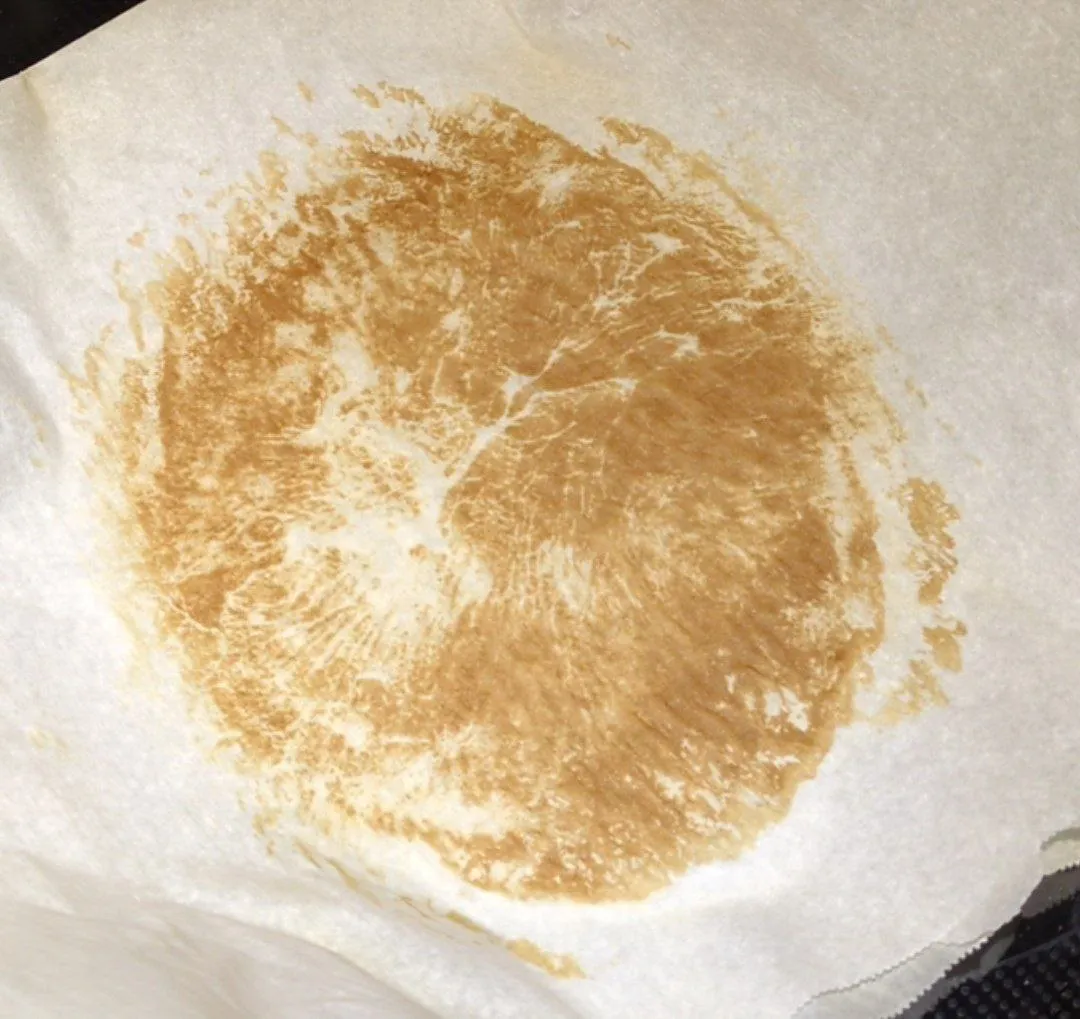
This annoys me. I have been tweaking the baking times etc. This recipe calls for putting the dough onto parchment paper and lowering it into (and out of) the blistering Dutch oven by the paper. That's fine. The paper where it touches the bread is very brown. The other side of the paper where it touches the dutch oven is not. I don't know if it matters, picture attached.
I have lots of variables here, from altering the recipe to cooking cooler but longer. What should I try?
Move it away from the heat. Enjoy!
I get a brown color like that without the bottom being overcooked, so that's probably not it. Also, some parchment papers scorch at lower temperatures than others. King Arthur paper seems to have the highest scorch temperature. Many dutch ovens do overcook the bottoms, especially if they are black or dark. One thing that helps is to put crumpled aluminum foil in the bottom, then cover that with a disk of parchment paper so the dough doesn't get caught in the folds of foil.
TomP
Thanks, I was trying not to use foil as for some reason it feels wasteful. That's not very rational, I know.
Since my posting, I've made 3 more loaves and unsurprisingly I got the same result. Perhaps I'll try this next. It would be a good data point if nothing else.
First, start with your Dutch oven on a higher shelf --- the highest that still gives you enough room so the bottom is farther from the heating element. What works for me in my oval Dutch oven is this roasting rack. I wait until oven spring is complete and give it a few more minutes until the loaf is set enough to lift, then slip this underneath before the bottom gets too dark. You could use a small round cooling rack for a round Dutch oven or move the loaf to a rack set on a sheet pan.
Oval Oven Roasting Rack with Integrated Feet
You can't see the rack, but it's under there making the loaf look like it's floating. Edited to add that this loaf is a 100% whole multi-grain with molasses and Styrian pumpkinseed oil. All things that naturally make this a darker loaf than one with mostly white flour. Speaking to David's point, to me, this is the right color for this loaf, and the browning adds so much good flavor :)
When I take the lid off the dutch oven, I find it helps to place it on the lower rack between the burner and the dutch oven to reduce the direct heat on the bottom.
I dust what will be the bottom of the loaf with semolina or cornmeal before dumping it into the DO. This seems to help.
That said, you havent' shown us the bottom of your loaves. What you find too dark others may prefer.
David
images below.
When I examine my oven, there only seems to be a coil on the top. The bottom is smooth.
I tried moving the Dutch oven to a lower shelf, but the thing is pretty large; there isn't a lot to do to get away from the heat, in a box designed to keep everything close to the heat :-)
It's also not a convection oven if that matters.
Move it one notch up and put a pan of some kind on the shelf below to shield the base of your baking vessel. I prefer to use stainless steel hotel pans to do this shielding.
Debra's suggestion is an alternative way to do it if your oven is very small.
-Jon
You most surely have one, but manufacturers like to put them under the floor of the oven these days where you can't see it. This helps to even out the bottom heat. Some even have a floor that slides out to expose it, although it's not immediately obvious. My last one did, but my current one doesn't.
I would suggest - and I have no idea if this will work - but what happens if you put something below the coil. At least you'll avoid direct heat. Enjoy!
Tony, it might help if you told us what kind of oven you have. It's strange that there does not appear to be a bottom element, but it's the bottom of the loaf that is too dark.
My electric oven heats from below but the element is hidden below a smooth panel.
TomP
My new little Ninja Combi has a hidden bottom element also.
We moved into this house relatively recently, and the oven was here, so I don't know what model it is. I'll dig into it. It probably has a hidden bottom element per internet knowledge but I won't know until I find the manual.
I use a cast iron Lodge dutch oven. The first couple of times I baked with it the bottom of my bread burned. I lowered the temp to 425F , problem solved. Another thing to try is doubling the sheet of parchment paper. You'd be amazed what a difference that can make.
Having used the same DO for many years, I blame it on the ovens, which changed over time. I dealt with the scorching issue in two ways: - Use middle rack or higher for the DO, and a sheet pan on rack right below it. The sheet pan will actually deflect the heat from the base of the DO. I used this method for years.
- Or, remove the loaf from the DO after 'lid on' phase (mine is 20 minutes at 450F) , place loaf directly on rack. I have found only benefits to doing this, especially a more pliable crust.
If you do decide to try this once, when you pull the loaf from the DO after 20 minutes, check to see if there is any scorching. Then you will know when it is happening. It is likely on the back end of the bake. If it is happening in the beginning, then you might want to check your oven temp with an oven thermometer. It would be odd to see scorching in a cast iron pot on a center rack at 450F.
You might also try placing a baking stone (if you have one), or a pizza stone on the lowest rack to help equalise the over browning of the lower crust. You did not mention if your oven has a convection fan, if so, are you using it during your bread baking?
Our previous house had an oven that always ran too hot. We called a repair tech out and he found that the thermostat was defective. After it was replaced, no more problems with over cooking.
Best wishes,