
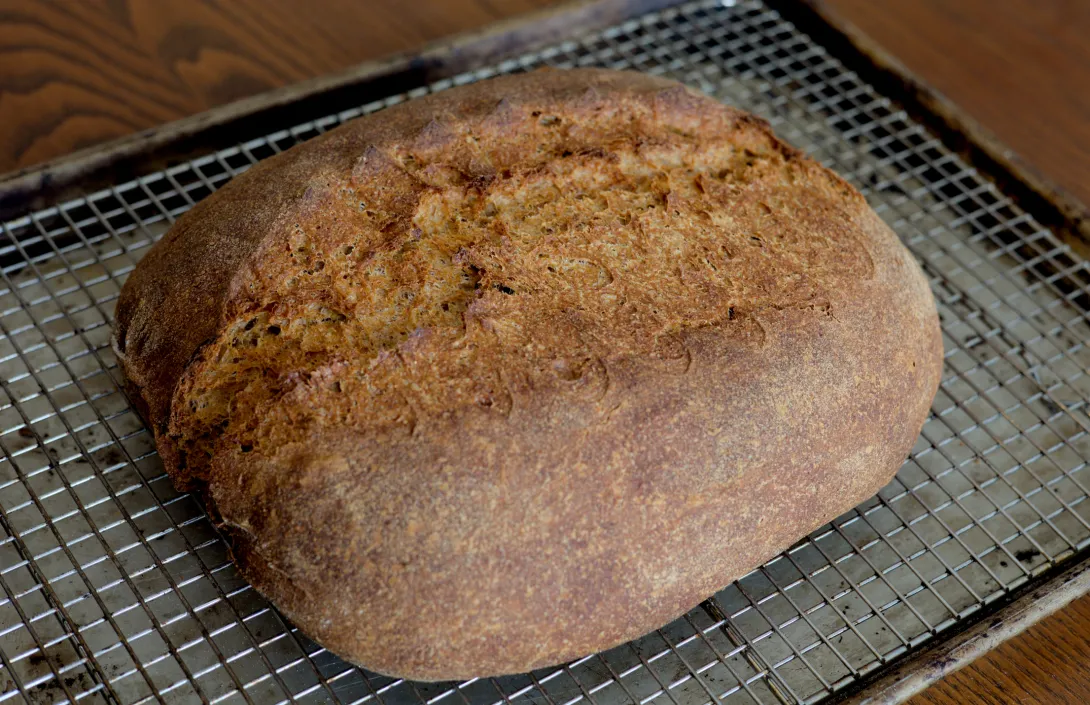
Though I'm sure no one will be surprised to discover that this was my first attempt at shaping a batard, it is a truly delicious bread.
After reading Lin's post about gofio, I had to know how toasting part of the flour would turn out. (Spoilers: very good, highly recommend!) My first attempt at toasting oats for this did not work out in two ways: I didn't go far enough for any discernable effect, and I learned the hard way about protease activity in freshly milled flour...
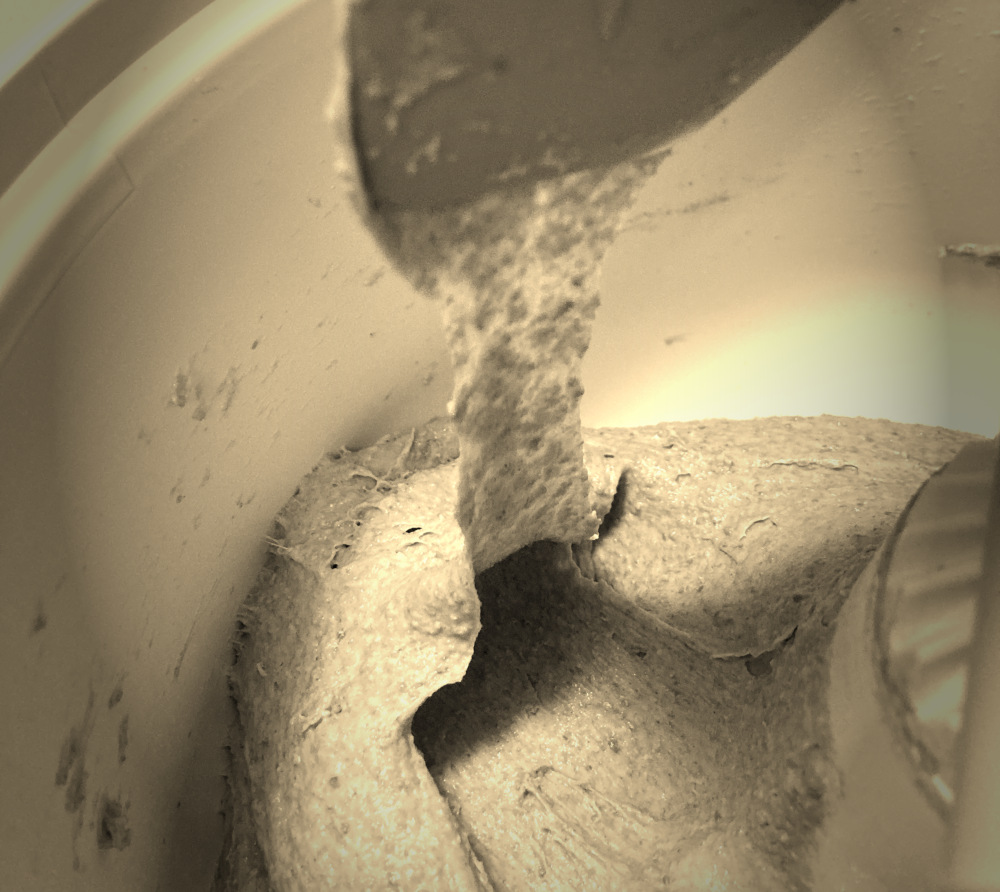
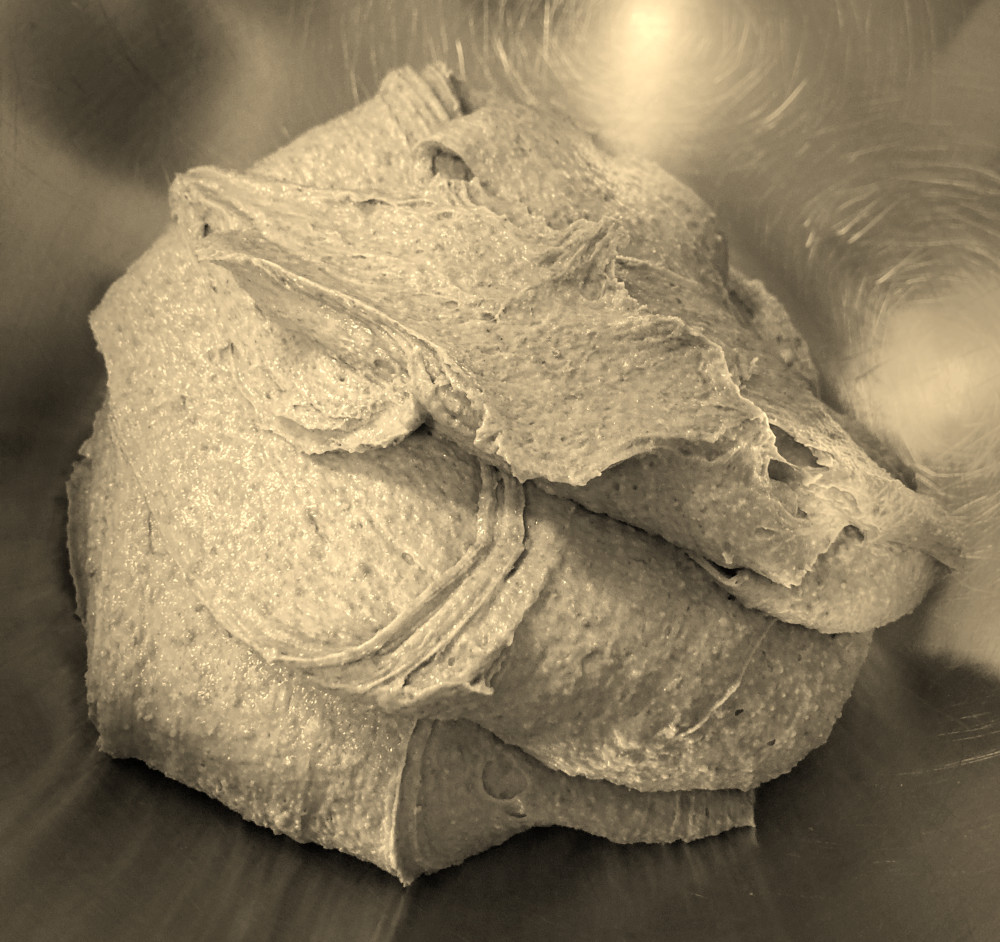
...The less said about that, the better.
This loaf, however, was well work the effort.
Mash
120g toasted oat flour (from rolled, semi-fine)
300g boiling water
1g diastatic malt powder (once cooled to or below 148F)
Autolyze, 45 minutes
all mash
481g Prairie Gold
60g "light syrup" from home canned peaches (unknown sugar:water ratio)
40g canned pineapple juice (note: raw/fresh may be inadvisable)
Dough
20g light syrup
21g honey (I intended 10g but overpoured)
14g light olive oil
9g salt
7g yeast
Bassinage
50g light syrup
For all the posts I've read on this forum wanting convenient ways to get ascorbic acid into bread, I'm surprised I never saw canned pineapple juice mentioned. I keep 40g cubes frozen for my 13" Pullman, about 1400g loaves, but that amount seemed to work well here too. Doughs with it tend to smell pineapple-y until partway through proofing, but I've never noticed a pineapple flavor in the finished bread. Folks who dislike pineapple may be more sensitive and prefer other options.
This time I wanted to toast the oats much further without burning any of the finer pieces, so instead of leaving them whole I blitzed the rolled oats into a semi-fine flour before they went into a dry, hot skillet. Then I used them in a mash which was held at about 148F in a water bath for about 5.5 hours. Both processes darken the oats, and these turned out quite dark indeed.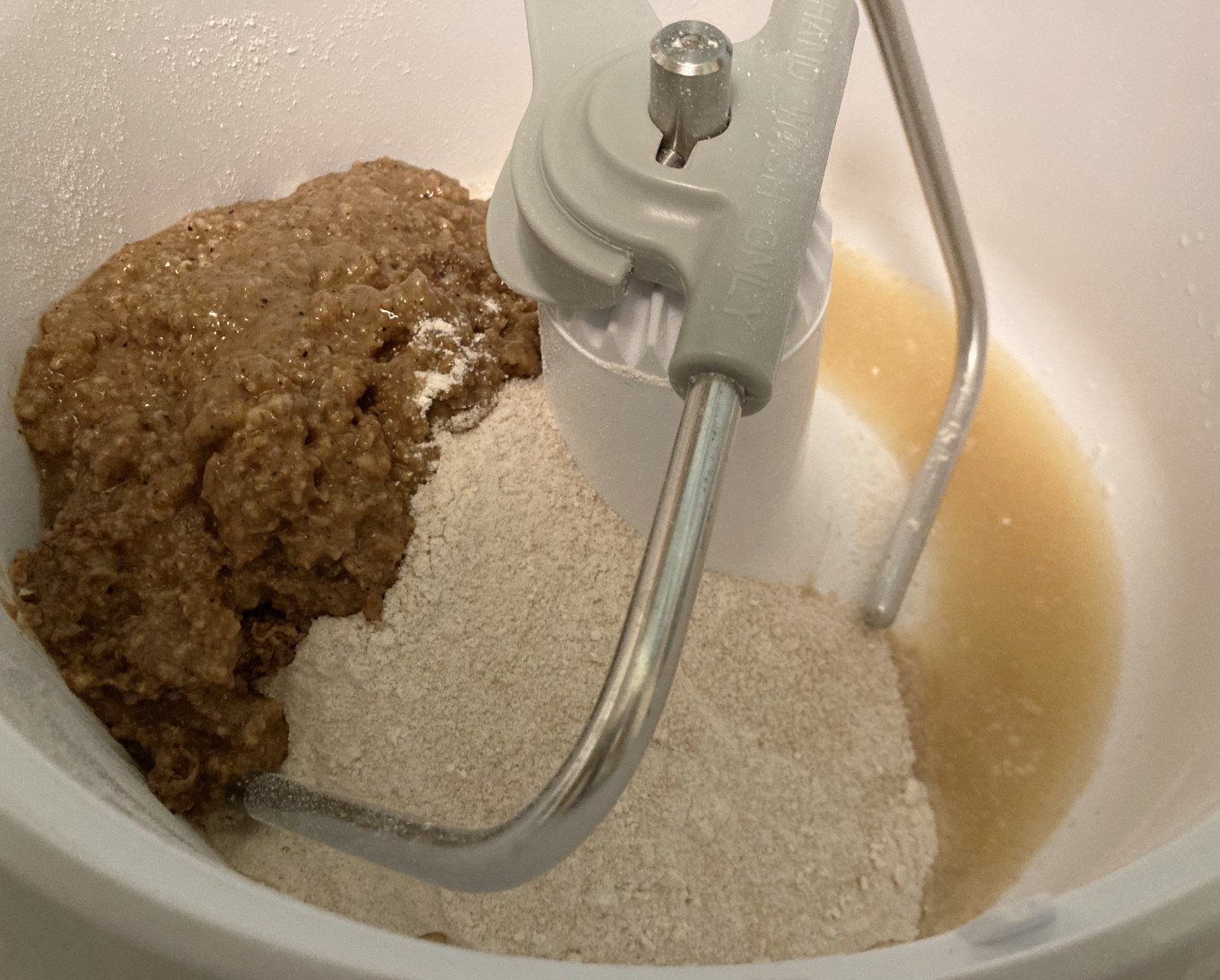
Hydration calculations will be somewhat inaccurate; I let quite a bit of water escape the mash in the process of figuring out a new setup. I felt this dough was in the ballpark of 75% hydration (including the oats with the flour); it probably ought to have been higher.
Kneaded until the tear in the windowpane was a small, smooth-edged hole. (Note that this can be very close to the point of overworking a dough.) With one 10m rest near the end.
BF with three folds at 10 min intervals, in a 160F oven for a total of 50 min. Pre-shaped then shaped (poorly), without much degassing at either stage, then put into a makeshift proofing structure that was not set up well. Proofed about 40 min at about 70F; should have been longer. Baked in a granite ware roaster on a cookie sheet 450F for 20 min, uncovered at 400F for about 20-30? min, then on rack, not sure how long.
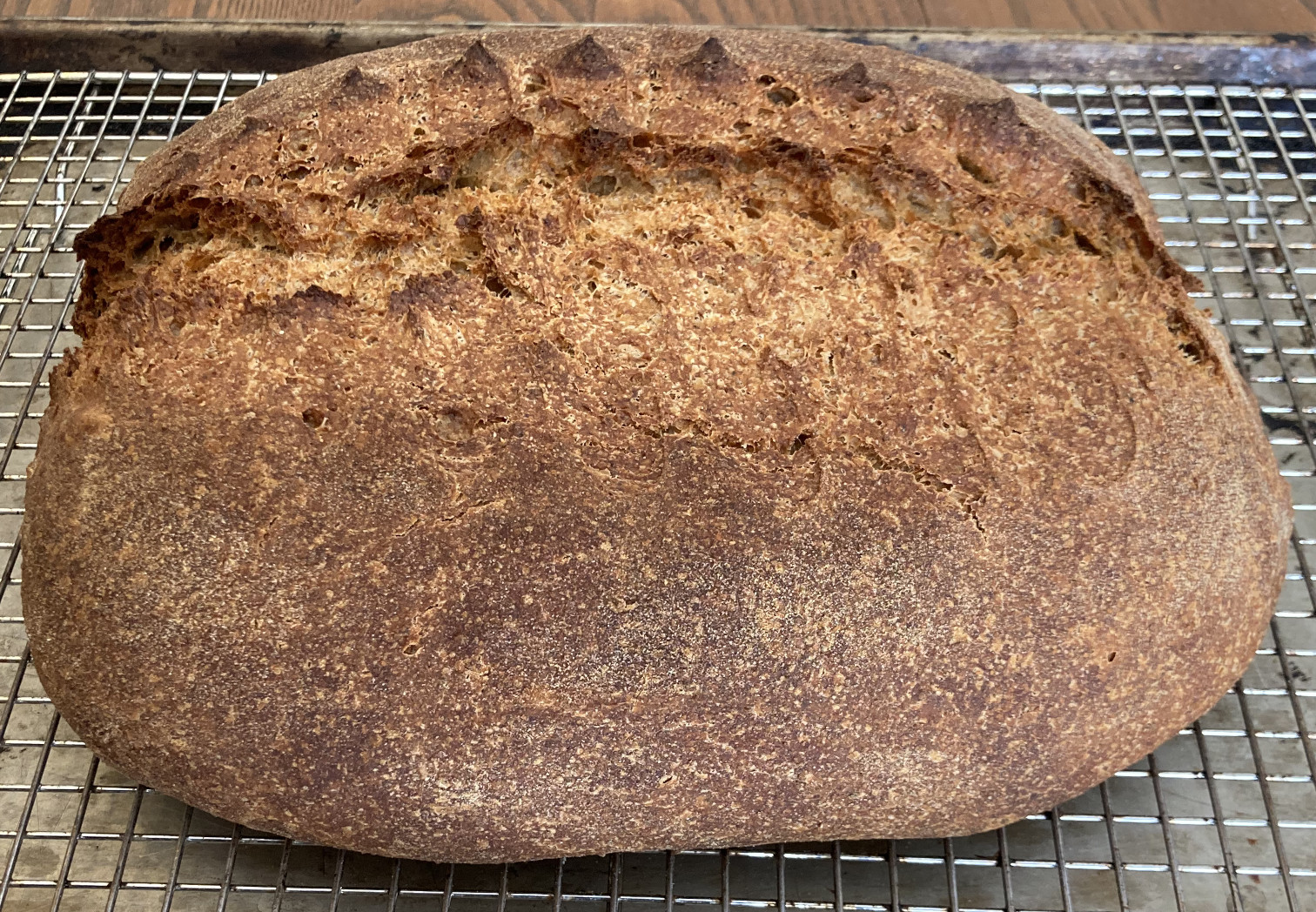
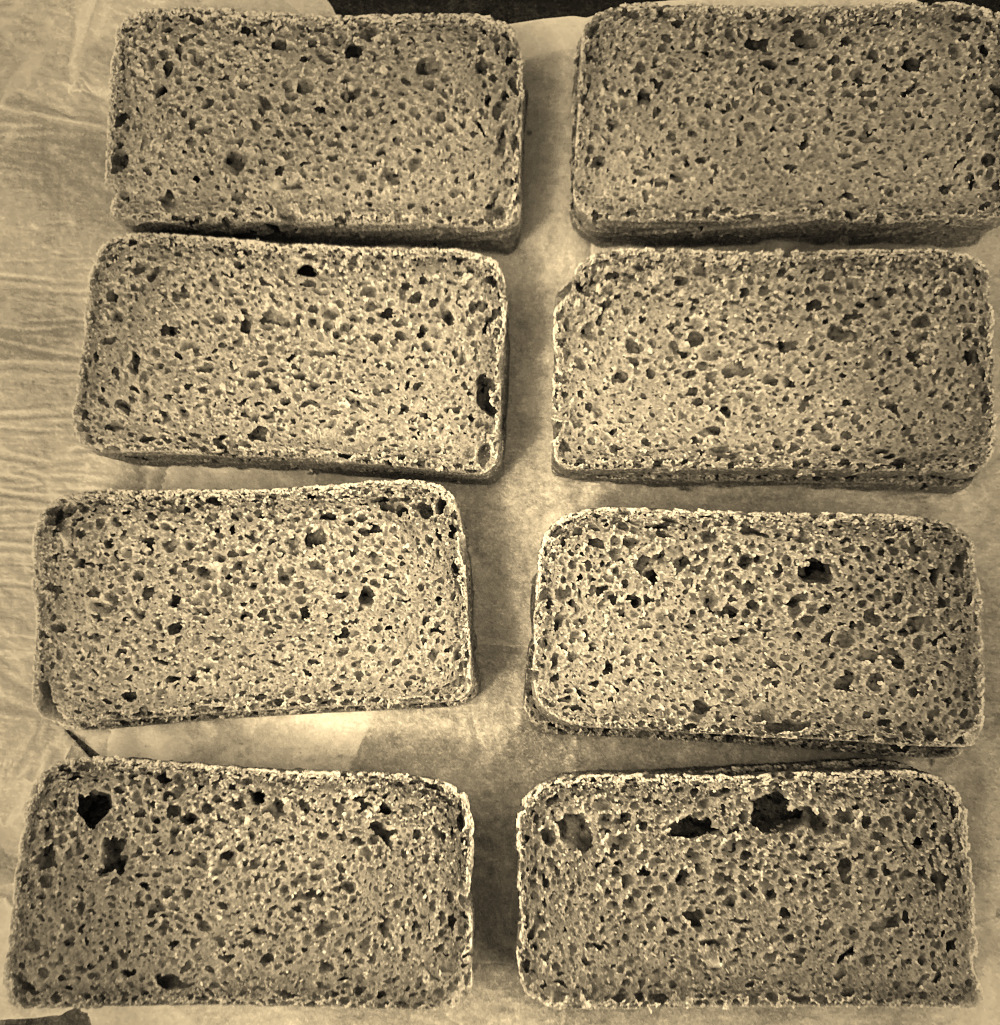
Unfortunately I was too distracted by wrangling the overly wide loaf into my slicer to get a traditional crumb shot, but here's the tray of slices for freezing:
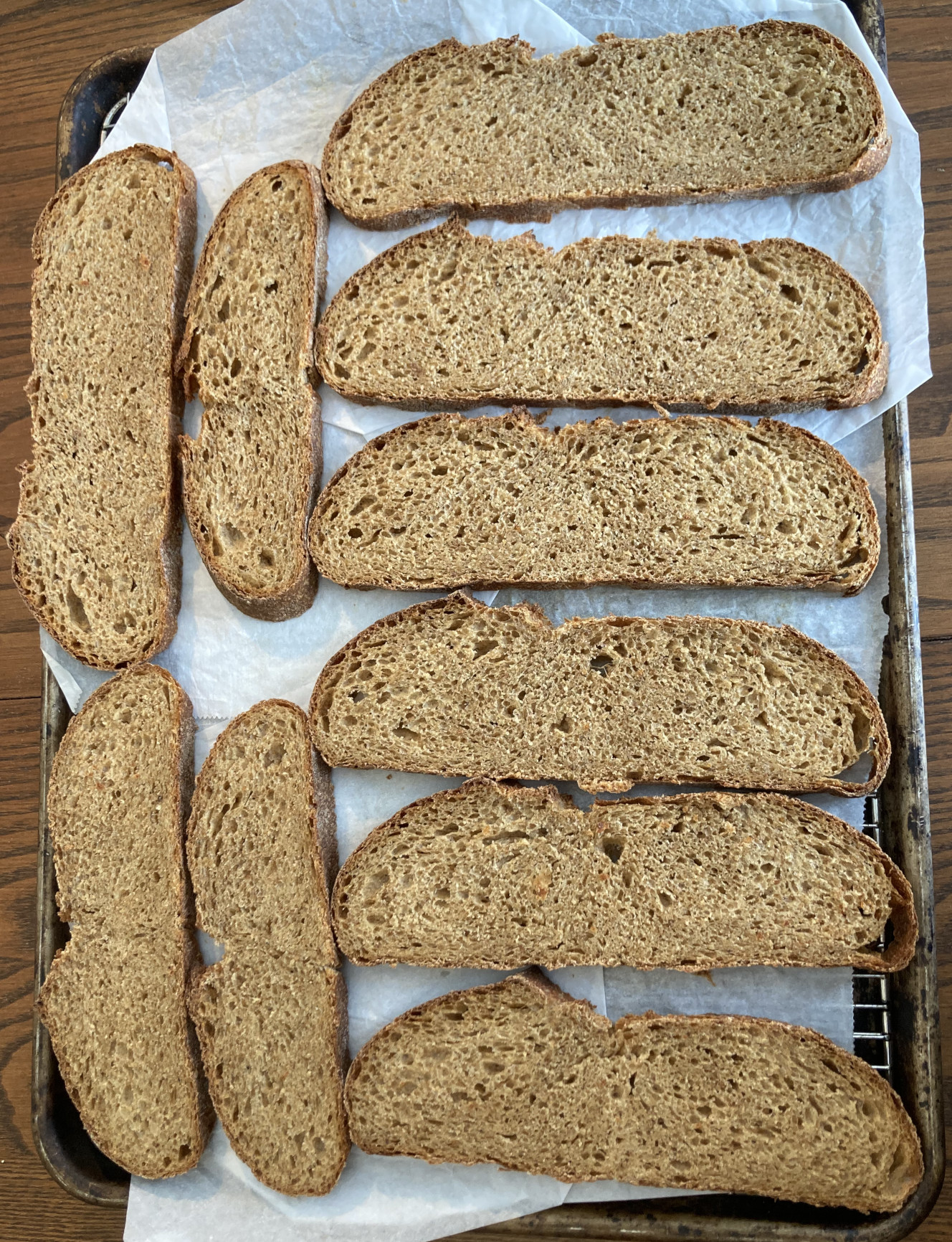
Taste-wise, it's great. The oat flavor really comes through, as does the toasting. It's complex and interesting in a way I haven't experienced before. The "oatiest" bread I've ever made, for sure.
Absolutely worth the effort of toasting, for me. I'll definitely be exploring a portion of toasted flour for a while (I've got a toasted barley mash going at time of posting, in fact.) For me it is too sweet but not off-putting; I think for the "typical" American palate it would not be sweet enough.
One significant question I had is how the toasted grain bread tastes as toast. An issue I'm running into assessing that is that this loaf is very prone to burning, unsurprisingly. But I think it's good? Maybe doesn't add much? I'm not sure at this point and will continue trying to get a well-toasted piece of bread from this style of dough.
I'm still learning exactly the effects a mash has on flavor, but I imagine that's part of where the complexity is coming from and definitely some of the sweetness. Sometimes there is an interesting, pleasant, lingering taste that I suspect may be maltose; it's different than the peach syrup, pineapple juice, and honey, I think. I quite like it and hope it's an effect of the saccharification process.
It's very tender and soft and notably more resistant to staling than my usual scald/yudane loaves.
With each mash bread I make, I'm finding it harder to imagine moving away from that as a standard step for me. I've figured out a setup that is very convenient to me and it makes a big difference is the texture of the loaf (so much more softness than I would expect from this level of enrichment). Most importantly for me, it adds a complexity in flavor -- which is almost always a top priority for me in any food I make -- that I haven't found another way to achieve. Toasting part of the flour won't be something I do every loaf because sometimes I do want a more neutral flavor, but that technique will certainly become part of my regular rotation.
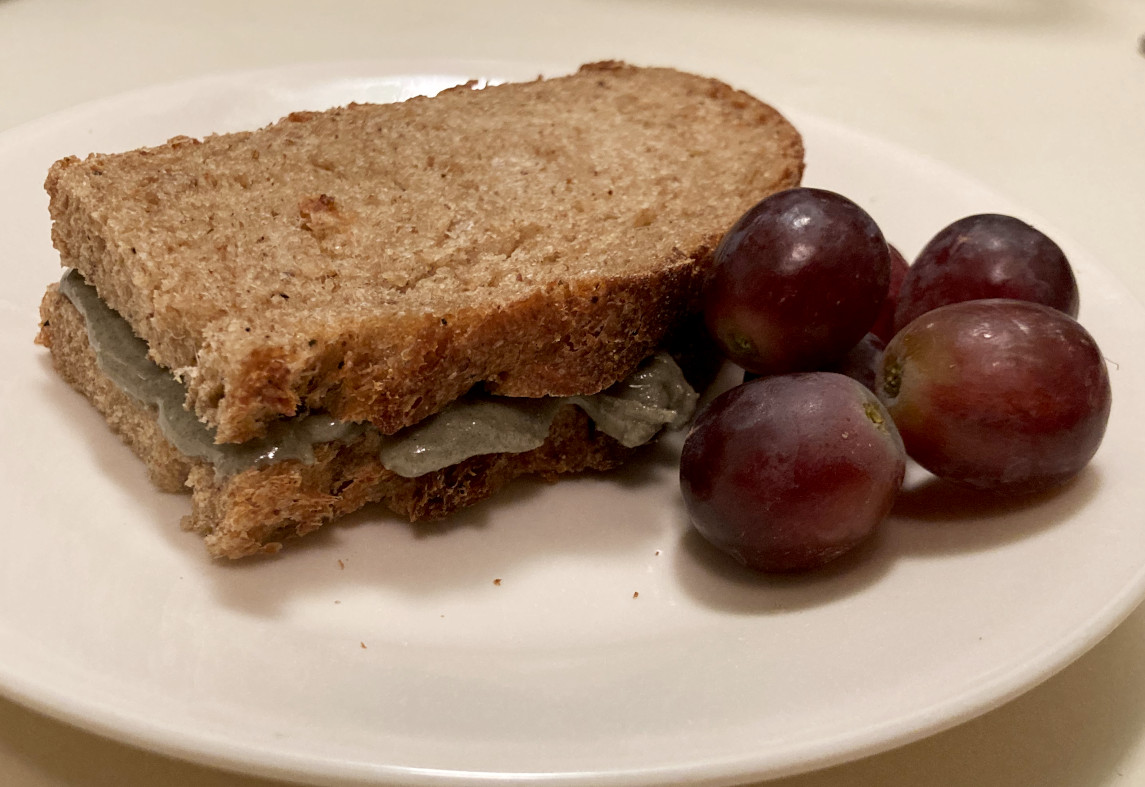
So far, pumpkin seed butter is the winner with this bread. And yes, I did go back and halve those ridiculously wide slices before they froze. Next time we'll hopefully see a more geometrically sensible loaf.
-Regis
- VerdigRegis's Blog
- Log in or register to post comments
I flake oats and barley as well as lots of other grains . I toast them in a skillet with some butter then scald.
I now have a sous vide circulator for my yogurt making to make it more stable as it ferments . I guess I could try a mash as you have done.
Likely I will observe from afar ( Virginia) and admire your gorgeous bread! I love my Pullman loaves. Glad you are exploring new avenues so all of us can enjoy. c
Thanks so much, that’s very kind of you. Some day my loaves might be beautiful like folks here share, but until then at least they usually taste good.
I have essentially set my Instant Pot up as a sous vide for the mash. It’s convenient for me because I was already making yogurt in it first thing in the morning the day before I usually bake, so I just get the mash going in the afternoon after pulling the yogurt.
I’m looking forward to getting back to making Pullman loaves, but my pan is 13” and while I’m playing around with recipes I’m fine with these slightly smaller loaves. A 9” pan is definitely something I’m thinking about though, it’s just such a good format.